

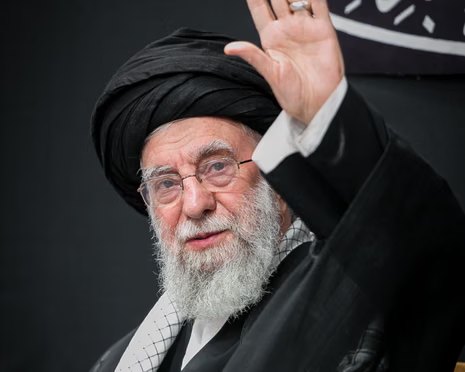
Iran will bury its late Supreme Leader, Ayatollah Ali Khamenei, on July 9 in his hometown of Mashhad, state television reported on Saturday, more than four months after he was killed in US-Israeli strikes.
The burial, initially expected earlier in the year but postponed because of the war, will follow several days of official funeral ceremonies. According to state media, commemorations will begin in Tehran on July 4 and continue through July 6, before another ceremony is held in the holy city of Qom on July 7.
The choice of July 4 as the opening day of the national funeral is symbolically significant, as it coincides with the United States’ Independence Day. This year marks the 250th anniversary of American independence, adding a political dimension to a funeral already charged with regional and international significance.
Khamenei, who led Iran for more than three decades, was killed on February 28 during the opening wave of US and Israeli strikes on Iranian targets. His death marked one of the most consequential moments in the Islamic Republic’s history and triggered a rapid leadership transition at a time of war and internal uncertainty.
His son, Mojtaba Khamenei, was named supreme leader in early March, becoming the third person to hold the position since the Islamic Revolution of 1979. Mojtaba had long been regarded as an influential figure behind the scenes, with close links to conservative clerical circles and the Islamic Revolutionary Guard Corps.
However, the new supreme leader has not appeared publicly since his appointment. Reports say he was wounded in the same strikes that killed his father and several other senior officials. Since assuming the role, he has communicated only through statements attributed to him, fuelling speculation about his condition and the balance of power inside Iran’s leadership.
The delayed funeral is unusual in Islamic tradition, which generally favours prompt burial. Iranian authorities have attributed the postponement to wartime conditions and security concerns.
The ceremonies are expected to draw senior Iranian officials, military commanders, clerics and supporters from across the country. They will also serve as a major test of the new leadership’s ability to project unity after months of war, political disruption and questions about the future direction of the Islamic Republic.



















