

NEW DELHI/ABU DHABI
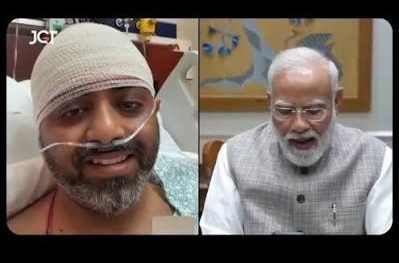
An Indian Flydubai captain who survived a violent cockpit attack has described to Prime Minister Narendra Modi how, despite suffering serious injuries, he managed to open the cockpit door as the aircraft plunged toward the ground, allowing passengers and crew to overpower his co-pilot and avert a potential catastrophe. Captain Smit Machchhar spoke to Modi by video from his hospital bed in Abu Dhabi on Friday, giving his first detailed public account of the September 30 incident aboard Flydubai Flight FZ1073 from Dubai to Tel Aviv.
Machchhar said he had collapsed from his injuries when he realised the aircraft was rapidly losing altitude. Knowing the cockpit door was within reach, he made a final effort to unlock it despite continuing to come under attack. Once the door opened, passengers and crew entered the cockpit and subdued the co-pilot. Two off-duty pilots travelling aboard the aircraft subsequently helped regain control and safely landed the jet in Tabuk, Saudi Arabia. The aircraft was carrying 174 passengers.
The United Arab Emirates provided its strongest official account of the incident on Saturday, saying the co-pilot attacked Machchhar with a cockpit emergency crash axe in an attempt to seize control of the aircraft. Emirati authorities described the episode as an attempted terrorist attack. The suspected attacker has been identified by sources as Hammam al-Hammami, an Omani national. He was detained after the aircraft landed and was later transferred to Abu Dhabi as investigators examined his motive and whether anyone else was involved.
During the call, Modi praised Machchhar’s courage and presence of mind, telling the veteran pilot that his actions had protected the lives of those aboard and strengthened the reputation of Indian aviation professionals. Machchhar, who has approximately 17 years of flying experience, said his training helped him understand the seriousness of the situation despite his injuries. Israeli Prime Minister Benjamin Netanyahu has said preliminary information suggested the co-pilot had undergone Islamist radicalisation and intended to crash the aircraft. Those claims remain part of an ongoing investigation, and authorities have not announced evidence establishing involvement by any outside state or organisation.
The incident has triggered fresh scrutiny of airline cockpit security, pilot vetting and emergency procedures on international routes. Israel, Saudi Arabia and the UAE are involved in investigating what authorities now regard as one of the most serious aviation-security incidents in the region in recent years.



















