

WARSAW, Poland
South Korean defence manufacturer Hyundai Rotem is advancing plans to establish a major tank manufacturing and maintenance hub in Poland, strengthening military cooperation between Seoul and Warsaw as European nations accelerate efforts to modernise their armed forces. The project gained momentum after the Polish government granted a tax incentive supporting local assembly of K2 battle tanks and production of components, according to Nikkei Asia.
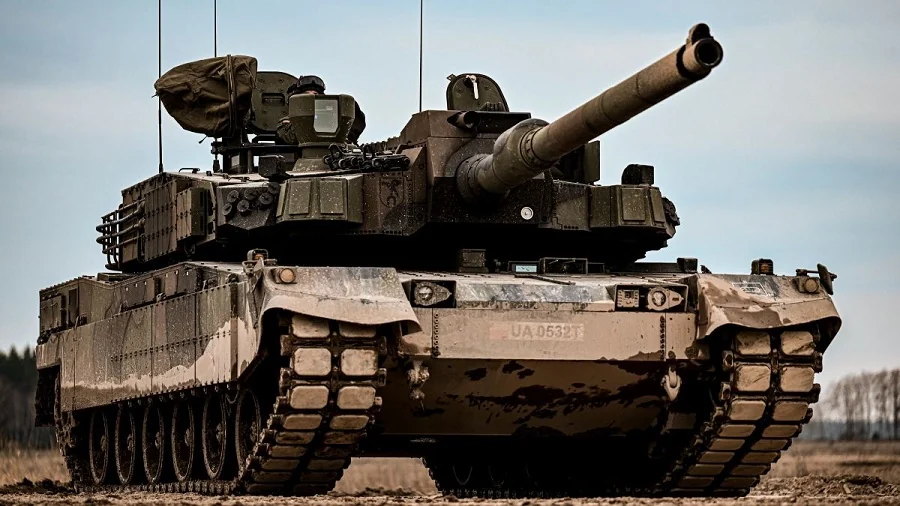
The initiative is expected to position Poland as a strategic European base for producing, maintaining and potentially exporting South Korea’s advanced K2 Black Panther tanks. Under an agreement signed in April, Hyundai Rotem will collaborate with Polish defence manufacturer Bumar-Łabędy, a subsidiary of state-owned Polska Grupa Zbrojeniowa (PGZ), to manufacture the Polish-adapted K2PL tank.
The partnership includes technology transfers, specialised training, component manufacturing and maintenance support. Production will be concentrated at Bumar-Łabędy’s facility in Gliwice, where 61 K2PL tanks are scheduled for local assembly between 2028 and 2030. The arrangement forms part of Poland’s second major procurement agreement with Hyundai Rotem, signed in August 2025 and valued at approximately $6.5 billion.
That contract covers 180 additional K2 tanks, including 116 standard K2GF models and 64 customised K2PL variants. The first three K2PL tanks will be manufactured in South Korea for testing before production expands in Poland. Beyond assembly, Hyundai Rotem is working with Polish companies to establish domestic supply chains for cameras, navigation systems, protective equipment and other components.
In September, the company signed an agreement with Huta Częstochowa to explore using Polish-made armour steel in military vehicle production. Poland also designated Wojskowe Zakłady Motoryzacyjne in Poznań to develop maintenance and overhaul capabilities for K2 tank power systems. The programme comes as Warsaw increases military investment amid continuing security concerns linked to Russia’s war in Ukraine. For Hyundai Rotem, the Polish partnership offers an opportunity to expand into other European defence markets, including Romania.
However, company officials have acknowledged that technology transfers, financing arrangements and European Union defence procurement requirements remain important challenges. The initiative could also create industrial opportunities for Polish manufacturers while reducing dependence on overseas servicing and replacement parts. Although the long-term ambition is to establish a European production and maintenance centre, additional export contracts have not been confirmed. For Poland and South Korea, the project represents a transition from conventional weapons purchases towards deeper industrial cooperation and shared defence manufacturing capabilities.



















