

SANAA, Yemen
Yemen’s Houthi rebels have claimed responsibility for a series of missile and drone attacks targeting Saudi Arabia, while the United States military confirmed striking and disabling a commercial vessel near the Strait of Hormuz, raising fresh concerns over escalating hostilities across the Middle East.
Houthi military spokesman Yahya Saree announced Saturday that the Iran-aligned group had carried out six operations against Saudi military and economic targets using ballistic missiles, cruise missiles and drones.
The claimed targets included King Khalid International Airport in Riyadh, Saudi Aramco oil facilities in Riyadh and Khurais, an oil pumping station in Dawadmi and a National Guard camp in Najran.
The group also claimed attacks against Saudi-backed forces in Yemen’s al-Jawf and Marib provinces.
Saudi authorities did not immediately confirm the alleged strikes or report damage to the targeted facilities.
However, the Saudi-led coalition said its air defences intercepted a Houthi ballistic missile over the Riyadh region.
The latest confrontation followed deadly airstrikes near Yemen’s capital, Sanaa, which Houthi authorities blamed on Saudi Arabia.
According to the Houthi-run Health Ministry, at least 27 people were killed and 36 wounded when airstrikes struck homes in al-Shariya village on Saturday. Many of the reported casualties were women and children.
Saudi officials had not confirmed responsibility, and international news agencies could not independently verify the casualty figures or the circumstances surrounding the attack.
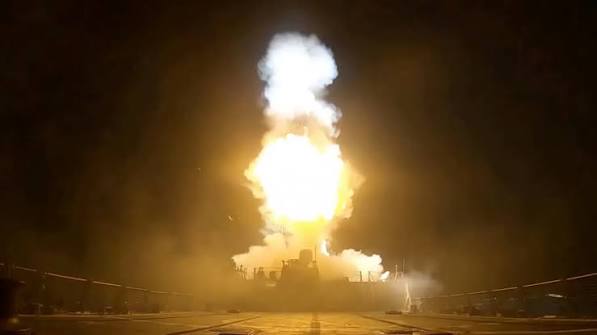
Meanwhile, United States Central Command announced that American forces had disabled a St. Kitts-flagged commercial vessel in the Gulf of Oman after its crew allegedly ignored repeated warnings and attempted to breach Washington’s naval blockade against Iran.
The military said the vessel had previously visited an Iranian port. Details about possible casualties and the extent of the damage were not immediately available.
The incident came one day after American forces conducted limited strikes against an Iranian air defence system, further complicating diplomatic efforts to ease regional tensions.
Washington has maintained its naval blockade against Iran as part of a broader military confrontation involving the United States, Israel and Tehran.
The developments have heightened concerns over maritime security around the Strait of Hormuz, a critical international shipping route for oil and gas supplies.
With fighting intensifying in Yemen and commercial vessels facing growing threats near Iranian waters, regional governments face renewed pressure to prevent further escalation.
Diplomatic efforts continue, but the latest attacks underline the fragile security situation and the growing risks to civilians, global trade and regional stability.



















