

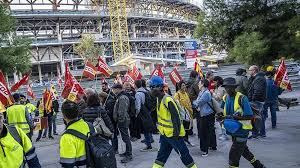
PARIS, FRANCE — Hundreds of thousands of people marched across France on Saturday as demonstrations demanding lower living costs, stronger public services and education reforms erupted into violent clashes, with police firing tear gas and water cannon in several cities. France’s Interior Ministry estimated that 550,000 people joined protests nationwide, while the CGT trade union put participation at 800,000. Most demonstrations were peaceful, but fires, looting and confrontations spread through Paris, Marseille, Lyon and other cities.
In the capital, masked groups hurled projectiles and fireworks at officers near Place de la République, prompting riot police to deploy crowd-control weapons. Vehicles burned and stores were ransacked as disorder extended beyond authorised marches. Prime Minister Sébastien Lecornu said late Saturday that 1,200 people had been arrested and 150 police officers injured. Authorities also reported extensive damage to public buildings, including the historic town hall in Limoges, which was largely destroyed by fire. A 17-year-old protester in Saint-Étienne lost his right hand in an incident involving a crowd-control grenade, according to AFP. The injury added to concerns about police tactics following earlier clashes with schoolchildren.
The national mobilisation grew out of student demonstrations that began in September over teacher shortages, deteriorating classrooms and unequal access to education. Teachers, trade unions, parents, farmers and supporters of the “yellow vest” movement subsequently joined, broadening demands to wages, pensions, fuel prices and public spending. President Emmanuel Macron condemned the destruction and said those responsible for attacks on businesses and government buildings would face prosecution. His administration has defended the need to maintain public order while acknowledging protesters’ right to demonstrate.
Protesters, however, say rising household expenses and weakening public services have made everyday life increasingly difficult. Some also accuse authorities of using excessive force against students, allegations that have prompted scrutiny and investigations. The political stakes are significant, with France approaching its 2027 presidential election at the end of Macron’s second term. Opposition leaders have responded differently to the unrest, with some condemning the violence and others emphasising the grievances behind the protests.
Police operations continued into the evening as municipal workers and business owners assessed the damage, with security forces guarding government facilities. Saturday’s events demonstrated both the breadth of public dissatisfaction and the growing challenge facing authorities: protecting peaceful dissent while preventing destructive violence. Whether the government can address demands for affordable living and better schools may shape the next phase of demonstrations.



















