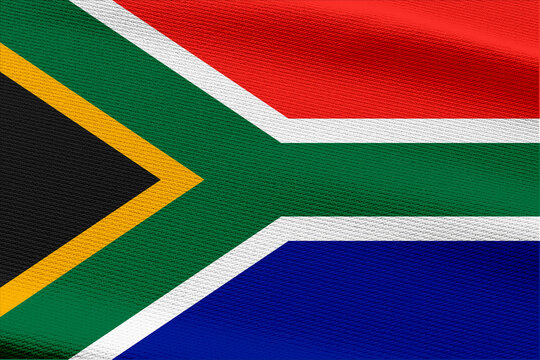
South Africa’s Democratic Alliance has elected Cape Town Mayor Geordin Hill-Lewis as its new federal leader, handing the country’s second-largest party to a younger figure as it prepares for local elections later this year and begins a longer push to challenge the African National Congress more directly by 2029. Hill-Lewis, 39, was chosen at the DA’s federal congress on Sunday, succeeding John Steenhuisen, who has led the party since 2019 and now serves as agriculture minister in South Africa’s coalition government.
In his acceptance speech, Hill-Lewis said he would dedicate himself to “building a stronger South Africa for everyone,” while making clear that the party’s ambition is no longer just to remain the main opposition force but to become the country’s biggest political party. He also told delegates the DA must now become “strong enough to win,” framing his election as both a generational shift and a strategic reset for a party trying to grow beyond its traditional urban and provincial strongholds.
Hill-Lewis brings into the role one of the DA’s most visible governing records. He has served as mayor of Cape Town since 2021, overseeing South Africa’s legislative capital and the Western Cape’s flagship metro. The Western Cape remains the only one of South Africa’s nine provinces governed by the DA, and the party has long pointed to Cape Town as its best example of administrative competence, infrastructure delivery and investor confidence. Reuters said Hill-Lewis was widely seen as the favourite going into the vote.
His election comes at a pivotal moment in South African politics. In the 2024 national election, the ANC lost its parliamentary majority for the first time since the end of apartheid and was forced into a multi-party coalition arrangement. The DA won 22% of the vote and entered national government, a move that gave it influence but also exposed it to new political risks as a coalition partner of the very party it hopes ultimately to displace.
The ANC remains the country’s largest party, but its dominance has weakened sharply over time, falling from 62% in the first democratic election in 1994 to around 40% in 2024. Recent Ipsos polling suggests the DA’s support has remained broadly steady at around the low 20s, while the ANC still leads nationally on roughly 38%. The same Ipsos study also found that nearly half of South Africans feel no political party truly represents them, pointing to both disillusionment and opportunity ahead of local elections due between November 2026 and January 2027.