NASA’s Artemis II mission ended in a successful Pacific splashdown on Friday, bringing home four astronauts after the first crewed journey around the Moon in more than half a century and giving the U.S. space agency a major boost in its effort to return humans to deep space. Commander Reid Wiseman, pilot Victor Glover, mission specialist Christina Koch and Canadian Space Agency astronaut Jeremy Hansen touched down at 5:07 p.m. PDT off the California coast aboard the Orion spacecraft after a nearly 10-day mission. NASA said the flight took the crew 252,756 miles from Earth at its farthest point, farther than any humans have traveled before.
The return capped a mission NASA described as a critical test of the Orion capsule, the Space Launch System rocket and the systems that will underpin future lunar expeditions. After splashdown, a combined NASA and U.S. military recovery team helped the astronauts out of the capsule and flew them by helicopter to the USS John P. Murtha for initial medical checks. NASA Administrator Jared Isaacman called the mission a historic achievement and said attention would now turn to preparing Artemis III.
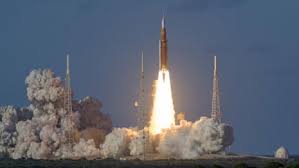
Artemis II launched from Florida on April 1 and flew a total of 694,481 miles, according to NASA. During the mission, the crew carried out tests of life-support systems, manual piloting procedures, spacesuits and emergency equipment designed to validate Orion for future missions. NASA said the spacecraft passed just 4,067 miles above the lunar surface during its closest approach and that the crew captured more than 7,000 images, including striking views of the Moon’s far side, earthset, earthrise and a solar eclipse seen from Orion’s perspective.
The fiery return to Earth was one of the mission’s most sensitive phases. NASA said Orion reentered the atmosphere at about 25,000 miles per hour, relying on its heat shield and parachute system to survive extreme temperatures and slow for splashdown. The agency had adjusted the reentry profile after lessons from an earlier uncrewed test flight, making this descent an important engineering demonstration as well as a symbolic homecoming.
The mission also carried historic firsts. Glover became the first Black astronaut to fly around the Moon, Koch the first woman, and Hansen the first non-American to do so. NASA says Artemis II now clears the way for Artemis III next year, which will test operations with commercially built lunar landers in low Earth orbit, ahead of a planned return to the lunar surface in 2028. More broadly, the mission marks the strongest sign yet that the Artemis programme has moved beyond promise and back into the realm of human lunar exploration.