

WINDHOEK, Namibia
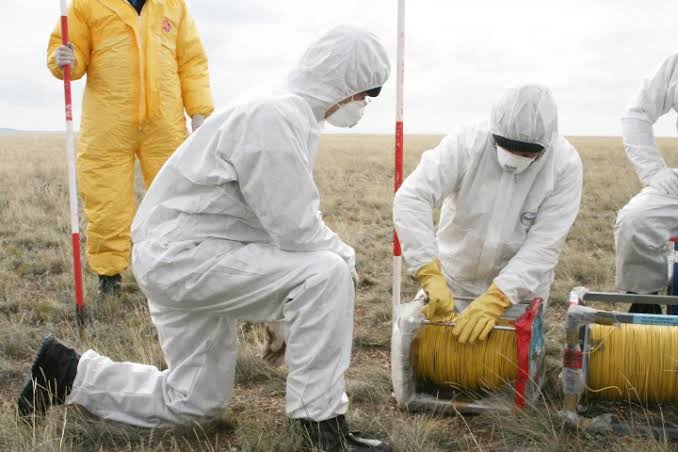
Around 250 international nuclear experts have gathered in Namibia’s desert region for a major verification exercise designed to test the world’s ability to detect and investigate suspected nuclear weapons explosions.
The six-week operation, organised by the Comprehensive Nuclear-Test-Ban Treaty Organization (CTBTO), marks the first large-scale exercise of its kind on African soil and represents a significant step in strengthening global nuclear monitoring capabilities.
Known as Integrated Field Exercise 2026 (IFE26), the programme is taking place in Namibia’s Erongo Region, where scientists, inspectors and technical specialists are simulating an investigation into a suspected underground nuclear explosion.
Organisers have stressed that the scenario is entirely fictional and that no nuclear explosion has occurred in Namibia.
The exercise, running from October 10 to November 20, involves testing specialised detection equipment, inspection procedures, scientific analysis and international coordination across a vast desert environment.
CTBTO Executive Secretary Robert Floyd described Namibia’s cooperation as crucial to the operation, highlighting the country’s contribution to international efforts to prevent nuclear weapons testing.
Oleg Rozhkov, Director of the organisation’s On-Site Inspection Division, said the exercise was only the third of its scale in the CTBTO’s 30-year history and the first conducted in Africa.
Previous exercises were held in Kazakhstan in 2008 and Jordan in 2014.
The operation comes amid continuing international concerns about nuclear proliferation and the effectiveness of global safeguards against nuclear weapons development.
The Comprehensive Nuclear-Test-Ban Treaty, opened for signature in 1996, prohibits all nuclear test explosions. However, it has yet to enter into force because several countries whose ratification is required have not completed the process.
Despite that limitation, the CTBTO operates a worldwide monitoring system designed to detect suspicious seismic, atmospheric and other signals associated with nuclear explosions.
On-site inspections would provide additional evidence to determine whether a prohibited test had taken place once the treaty becomes legally operational.
Namibia, which signed the treaty in 1996 and ratified it in 2001, has positioned itself as an active participant in international nuclear non-proliferation efforts.
Officials say the exercise will strengthen technical expertise, improve emergency coordination and identify weaknesses in existing verification procedures.
With more than 2,000 nuclear tests conducted worldwide before the treaty opened for signature, experts consider effective monitoring essential to preventing renewed nuclear testing.
For the CTBTO, the Namibia exercise is a critical opportunity to demonstrate that international inspectors can respond effectively when evidence of a possible nuclear explosion demands investigation.



















