

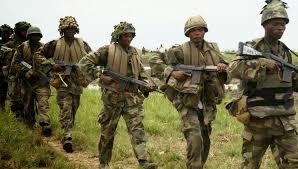
The United States government has given the green light for a potential $346 million Foreign Military Sale to strengthen Nigeria’s capacity to combat terrorist groups and curb illicit trafficking, both within the country and across the Gulf of Guinea.
The Defense Security Cooperation Agency (DSCA), the arm of the US Department of State responsible for overseeing such transactions, confirmed yesterday that it had sent the required notification to Congress about the possible deal.
According to the DSCA, the sale aligns with Washington’s foreign policy and security interests, enhancing the protection of “a strategic partner in Sub-Saharan Africa.”
“The proposed sale will improve Nigeria’s capability to meet current and future threats through operations against terrorist organisations and to counter illicit trafficking in Nigeria and the Gulf of Guinea. Nigeria will have no difficulty absorbing these munitions into its armed forces,” the agency said. It added that the deal “will not alter the basic military balance in the region” and will have “no adverse impact on U.S. defense readiness.”
The package includes an array of precision-guided munitions and related equipment: 1,002 MK-82 general-purpose 500 lb bombs; 1,002 MXU-650 Air Foil Groups for Paveway II GBU-12; 515 MXU-1006 Air Foil Groups for Paveway II GBU-58; 1,517 MAU-169 or MAU-209 computer control groups for GBU-12/GBU-58; 1,002 FMU-152 joint programmable fuzes; and 5,000 Advanced Precision Kill Weapon System II rounds, each with a WGU-59/B guidance section, high-explosive warhead, and MK66-4 rocket motor.
Non-MDE (Major Defense Equipment) components such as FMU-139 fuzes, bomb parts, practice rockets, integration support tools, and technical services will also be provided. The main contractors are listed as RTX Missiles and Defense (Tucson, Arizona), Lockheed Martin Corporation (Archibald, Pennsylvania), and BAE Systems (Hudson, New Hampshire).
The DSCA clarified that fulfilling the contract will not require additional deployment of US government or contractor personnel to Nigeria.
The development follows renewed calls from the US for coordinated regional action against armed groups such as Boko Haram, ISIS-Sahel, and ISIS-West Africa. Just days earlier, the US Ambassador to the UN, Dorothy Shea, told the Security Council that Washington remains committed to working with West African and Sahelian nations to confront these threats, warning that “terrorists know no borders.”



















