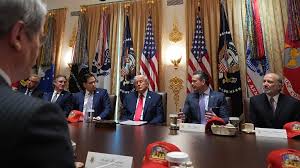
ABUJA, Nigeria — President Bola Tinubu on Sunday received a United States delegation led by General Dagvin R. M. Anderson, Commander of U.S. Africa Command (AFRICOM), at the Presidential Villa in Abuja, in a meeting that underscores rapidly expanding security cooperation between both countries.
The U.S. team included the Chargé d’Affaires at the U.S. Embassy in Nigeria, Keith Heffern, alongside other senior officials. Tinubu hosted the delegation with National Security Adviser Nuhu Ribadu and top Nigerian military chiefs present, according to a presidency-linked statement shared by presidential aide Dada Olusegun.
While no formal communique from the closed-door session had been released at press time, the timing is significant. The visit comes days after U.S. officials publicly confirmed that a small American military team had been sent to Nigeria following bilateral talks aimed at strengthening counterterrorism coordination.
Reuters reported on February 3 that AFRICOM described the deployment as mutually agreed support providing “unique U.S. capabilities,” without detailing exact force size or mission scope. The Associated Press similarly said the team’s role is tied to intelligence and support cooperation rather than an announced frontline combat deployment.
The diplomatic-security push follows a worsening threat environment in parts of Nigeria, including recent mass-casualty attacks in Kwara and continued kidnappings in the north. Tinubu has responded with additional military deployments in vulnerable corridors, adding urgency to external security partnerships.
The latest engagement also sits in the aftermath of U.S. strikes on ISIS-linked targets in Sokoto State on December 25, 2025, which AFRICOM said were coordinated with Nigerian authorities. That operation marked a notable shift in overt U.S. kinetic involvement connected to Nigeria-based militant threats.
Taken together, Sunday’s Abuja meeting suggests both governments are moving from episodic cooperation toward a more structured security relationship—one likely to center on intelligence fusion, surveillance support, and pressure on jihadist networks operating across northwestern and north-central belts. (This final point is an inference from official statements and recent actions.