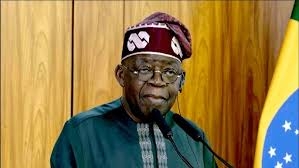
NEW YORK/ABUJA — President Bola Tinubu has warned that the United Nations must undergo sweeping reform or face growing irrelevance as global crises increasingly bypass its influence. In a policy address to the 80th UN General Assembly—delivered by Vice President Kashim Shettima—Tinubu said the gulf between the UN’s rhetoric and outcomes is eroding credibility amid “stains on our collective humanity,” from the Middle East to other conflict zones.
Tinubu outlined four pillars of reform, led by a renewed demand for Nigeria’s permanent seat on the UN Security Council as part of a broader institutional shake-up. “The United Nations will recover its relevance only when it reflects the world as it is, not as it was,” he said, arguing Nigeria’s demographic weight—236 million people and a rapidly growing, youthful population—merits a voice commensurate with its role in regional security and the global economy.
On geopolitics, Tinubu reiterated unambiguous support for a two-state solution as “the most dignified path to lasting peace for the people of Palestine,” insisting Palestinians are “not collateral damage” but bearers of equal rights and dignity.
Turning to the global economy, Tinubu proposed “a binding mechanism to manage sovereign debt—a sort of International Court of Justice for money”—to help emerging economies escape dependence on unprocessed commodity exports. He called for debt relief as a growth and stability imperative, not charity, and urged reforms in trade and finance that expand access for developing nations.
Positioning Africa as essential to future technological security, the president said the continent’s critical minerals should be explored, processed, and benefit producer countries through local value-addition and jobs, warning that raw-export models fuel inequality and instability. On technology governance, he endorsed the idea that “‘AI’ must stand for ‘Africa Included’,” calling for a new dialogue to close the digital divide and accelerate knowledge transfer.
Tinubu also cast Nigeria’s domestic economic overhaul—removal of subsidies, exchange-rate reforms and market-enabling policies—as a tough but necessary blueprint for resilience. “I believe in the power of the market to transform,” he said, while acknowledging the transition’s near-term hardship for citizens.
On security, Tinubu argued that values and ideas, not force alone, win generational struggles against violent extremism, pledging continued cooperation on counterterrorism alongside rights protection.
Reaffirming Nigeria’s commitment to multilateralism, human rights, peace and development, Tinubu warned that the UN risks drift without visible change: “We must make real change—change that works, and change that is seen to work. If we fail, the direction of travel is already predictable.”
The Presidency’s media aide Stanley Nkwocha said the intervention was intended to catalyze consensus on Security Council expansion, debt architecture reform, digital inclusion, and mineral value-addition areas Abuja says are decisive for a fairer, more effective global order.