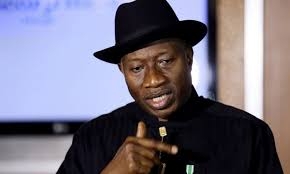
Former Nigerian President Goodluck Jonathan has revealed that a major constitutional crisis in 2010 was sparked by the deliberate actions of a close aide to then-President Umaru Musa Yar’Adua, who withheld a crucial letter meant to empower Jonathan to serve as Acting President.
In a recently surfaced interview with the Rainbow Book Club, which began trending online on Saturday, Jonathan recounted how President Yar’Adua had intended to formally transfer authority to him before traveling abroad for medical care. However, the plan was thwarted when the aide failed to deliver the letter to the National Assembly.
“One year that Yar’Adua was going for the medical checkup… a letter was written,” Jonathan said. “Of course, the constitution says that for the vice president to act, the president would send a letter to the Senate and the House of Reps informing them. That letter was written, but the person who the letter was handed over to… refused to submit it.”
As a result, Nigeria was left in a constitutional limbo for several months. While Jonathan could perform some vice-presidential functions — like chairing Federal Executive Council meetings — he lacked the constitutional authority to act as commander-in-chief.
He reflected on the situation, saying: “So we had a country where the president was not available, and there was no acting president… There’s nothing like acting commander-in-chief. Either you’re a commander-in-chief or not.”
Jonathan explained that ethnic and religious politics complicated the matter further. “There’s always a balancing between North and South, Muslims and Christians,” he said. “Yar’Adua was a Northern Muslim… [and] definitely the Northern Muslims wanted Yar’Adua to at least do eight years before power would return to the South.”
The impasse persisted until the National Assembly intervened by invoking the “doctrine of necessity,” a move that formally allowed Jonathan to assume the role of Acting President without the original letter from Yar’Adua.
He expressed gratitude to the lawmakers, stating: “When the National Assembly felt that the country was in a situation where it was not expected, they now have to initiate this doctrine of necessity. And they now made me to act as a president without a letter from Yar’Adua.”
Jonathan also drew comparisons with how such situations are handled in the United States. “A country like America, they don’t allow that gap at all,” he said. “Even if it’s a whitlow… [and] the president will be off for five minutes, he will hand over to the vice president.”
Jonathan’s recollection offers rare insight into a pivotal period in Nigeria’s democratic journey, underscoring the fragility of political transitions and the significance of constitutional safeguards.