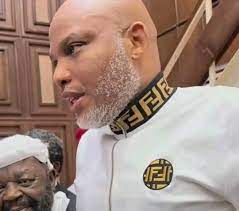
The detained leader of the Indigenous People of Biafra (IPOB), Nnamdi Kanu, has written to United States President, Donald Trump, urging Washington to take immediate action against what he described as ongoing genocide and state-sponsored violence in Nigeria’s South-East region.
In the letter, dated November 6, 2025, Kanu alleged that the Nigerian government and its security forces were waging a coordinated campaign of extermination against Christians and the Igbo population under the pretext of national security. He accused the military and intelligence agencies of committing mass killings, enforced disappearances, and arbitrary detentions, warning that the silence of the international community could embolden further atrocities.
Kanu expressed strong support for Trump’s recent stance on Nigeria’s human rights record, particularly his claims that Christians in Nigeria were facing systemic persecution. He appealed to the U.S. leader to use his global influence to push for an independent investigation into what he called “crimes against humanity” being carried out by Nigerian authorities.
According to Kanu, the Nigerian state has weaponised security operations to suppress political dissent and ethnic identity. He cited reports of military raids in South-East communities, alleging that many civilians had been killed, homes destroyed, and innocent people detained without trial. He maintained that his own detention since June 2021, following his controversial arrest in Kenya and rendition to Nigeria, reflected the government’s broader policy of silencing voices demanding justice and self-determination.
The IPOB leader called on the United States government to impose targeted sanctions on Nigerian officials found culpable in human rights abuses, particularly those overseeing military operations in the region. He also urged Washington to support a peaceful referendum that would allow the Igbo people to decide their political future.
Kanu argued that Nigeria’s internal mechanisms had failed to protect its citizens, claiming that both domestic courts and international rulings ordering his release had been ignored by the authorities. He described the situation in the country as one that “requires urgent global attention to prevent another Rwanda.”
The Nigerian government has repeatedly denied allegations of genocide or religious persecution, insisting that security forces are only responding to violent attacks carried out by armed separatists and criminal groups in the South-East. Officials have also dismissed Kanu’s claims as propaganda aimed at undermining Nigeria’s sovereignty.
However, Kanu’s letter appears to have reignited global attention on the crisis in the South-East. International human rights organisations have previously documented cases of extrajudicial killings and indiscriminate arrests in the region, though they have stopped short of classifying the situation as genocide.
Kanu concluded his letter by calling on the U.S. and other world powers to “act now before it is too late,” warning that continued silence would amount to complicity. His message comes amid renewed diplomatic tension between Abuja and Washington, following Trump’s warning that the U.S. could take action if Nigeria fails to address alleged human rights violations and religious persecution.
T