

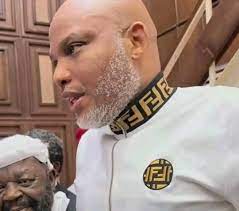
A fresh leadership dispute has emerged within the Indigenous People of Biafra (IPOB) following the announcement by a faction of the group that it had suspended its detained leader, Nnamdi Kanu.
The move, announced by the Chikadibia Edoziem-led Directorate of State (DOS), has been strongly rejected by IPOB’s recognised leadership, which described the action as unconstitutional and without legal effect.
In a statement issued on Thursday, Edoziem said the decision followed a June 17 meeting at which members reviewed an intelligence report allegedly submitted by the organisation’s M-Branch.
According to the faction, the report centred on an alleged meeting involving Kanu and officials of the Department of State Services (DSS) and the National Intelligence Agency (NIA) at the facility where he is being held.
The group also announced Kanu’s removal as a director of Radio Biafra, arguing that the measures were necessary to reposition the organisation and preserve its operational integrity.
Edoziem maintained that IPOB was established as a collective self-determination movement and not as an organisation controlled by any single individual.
He said the suspension was intended to prevent what the faction described as arbitrary actions capable of exposing members to arrest, torture and death.
The group further alleged that there were attempts to establish a new militia structure that could fuel violence in the South-East and weaken IPOB’s existing framework.
“Any such crime or criminal activity taken in the name of the suspended office of the leader shall not be attributed to IPOB but solely to the person or persons who may have instigated them.”
However, IPOB spokesperson Emma Powerful dismissed the announcement, insisting that Edoziem and members of what he described as the dissolved third Directorate of State no longer possess the authority to speak or act on behalf of the movement.
According to Powerful, Kanu had already dissolved the Edoziem-led administration under powers granted by the IPOB Code of Conduct and subsequently inaugurated a fourth Directorate of State headed by Chris Nwaọgụ.
“No person can derive authority from an office that has already ceased to exist.”
IPOB argued that only the office of the Supreme Leader has the constitutional authority to appoint, suspend or remove principal officers and administrative structures within the organisation.
“The authority to appoint, suspend, dismiss or dissolve principal officers and administrative structures resides exclusively in the Office of the Supreme Leader.”
“No Coordinator, Principal Officer, Directorate, Committee or collective body possesses any constitutional authority to suspend, remove or overrule the Supreme Leader.”
The group described the purported suspension as a “legal impossibility” and directed members worldwide to disregard all statements, appointments and directives issued by Edoziem and his associates.
“The third administration of the Directorate of State no longer exists. Its tenure has been terminated by lawful authority and its powers extinguished.”
Reaffirming loyalty to Kanu, IPOB said the newly constituted fourth DOS remains operational and accountable to the detained leader.
The latest development has intensified internal divisions within the separatist movement, with both factions laying claim to legitimacy and control over the organisation’s affairs.



















