

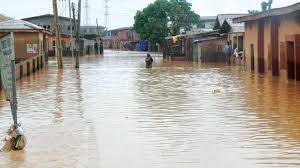
LAGOS — Residents of Ikota and the Lekki corridor have issued a Save-Our-Souls (SOS) appeal to Governor Babajide Sanwo-Olu after Tuesday’s downpour left homes and major roads submerged, crippling businesses and displacing families.
“This is no way to live… Every rainfall is a disaster. We are losing everything while the government watches,” a distraught homeowner said, as neighbours waded through knee-deep water to salvage belongings.
Community leaders blamed the recurring floods on man-made blockages, alleging that illegal structures on canals and key drainage arteries—Systems 156 and 157 — have choked natural waterways. They accused developers of building on rights-of-way and the state of weak, selective enforcement of planning laws.
“Until the government restores this area according to the original master plan, the flooding will not stop,” another resident said.
Urban planners and environmental advocates corroborated the claims, noting that Lagos’ master plan prohibits construction on waterways, but adherence has often lagged behind rapid real-estate expansion. Activists warned that stagnant floodwater poses public-health risks, from waterborne diseases to vector infestations, and that recurrent inundations are eroding livelihoods and property values.
“Every illegal structure is a ticking time bomb for nearby communities once the rains return,” an environmental campaigner said, urging emergency clearance of canals and firm action against encroachment.
The residents’ demands include:
- Immediate desilting and clearance of System 156/157 drainage channels and feeder canals;
- Transparent enforcement of planning and environmental laws, with penalties for violators;
- Publication of a time-bound drainage maintenance schedule for Ikota–Lekki;
- Community engagement on flood-resilience measures, including waste management, flood-proofing, and early-warning alerts.
Tuesday’s storm is the latest in a series of downpours that have exposed vulnerabilities in Lagos’ stormwater infrastructure amid high-density development and sea-level pressure along the Atlantic corridor. Residents say swift, visible action—backed by routine maintenance and planning discipline—is essential to prevent the next rainfall from becoming another urban disaster.



















