

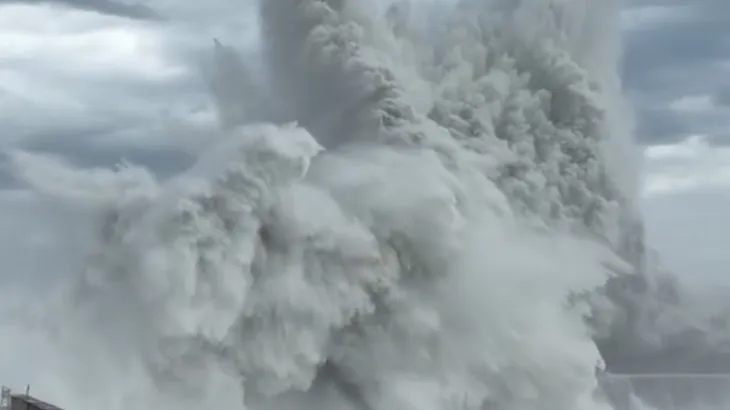
TAIPEI, TAIWAN
Typhoon Champi has swept across Taiwan’s northeastern coastline, killing at least one person and injuring 527 others as destructive winds, torrential rainfall and widespread power outages disrupted daily life across the island. The powerful storm, previously classified as a super typhoon, battered coastal communities late Friday and early Saturday, October 24, uprooting trees, damaging buildings and forcing authorities to shut schools, government offices and transportation services.
According to Taiwan’s emergency authorities, the sole confirmed fatality was a man swept away by powerful waves near Liuqiu Island in southern Taiwan. Rescue personnel recovered the victim on Thursday, but he was later pronounced dead at a hospital. The National Fire Agency reported that 527 people sustained injuries during the storm, with incidents involving falling debris, traffic accidents and dangerous weather conditions. Taiwan’s Central Weather Administration said Champi had weakened considerably after reaching super-typhoon strength earlier in the week. Nevertheless, the system continued producing powerful gusts, with winds reaching approximately 126 kilometres per hour near its centre as it moved away from the island.
In some coastal areas, gusts reached 227 kilometres per hour, damaging rooftops, bringing down power lines and leaving roads littered with debris. Taiwan Power Company reported that more than 288,000 households experienced electricity disruptions, although restoration teams had reconnected most affected customers. Transportation services were severely affected. Nearly 1,000 flights were cancelled on Friday, while a further 259 cancellations were reported on Saturday.
Authorities also suspended ferry services and ordered schools and government offices across northern and central Taiwan to remain closed for a second consecutive day. In Yilan County, where the storm passed closest to land, residents described frightening overnight conditions as violent winds shook buildings and damaged agricultural properties. Heavy rainfall also raised concerns about flash flooding and landslides in mountainous communities. Thousands of residents were evacuated from vulnerable locations as emergency teams maintained rescue operations and monitored weather conditions.
Meanwhile, Chinese authorities intensified preparations along the eastern coastline, deploying emergency personnel and securing fishing vessels as the weakening typhoon approached. Forecasters expect Champi to track northward near China’s coast before moving toward southern Japan. Although the storm is gradually losing strength, authorities have urged residents to remain cautious, avoid dangerous coastal areas and follow official weather warnings. The disaster has once again highlighted the destructive potential of Pacific typhoons and the importance of emergency preparedness across East Asia.



















