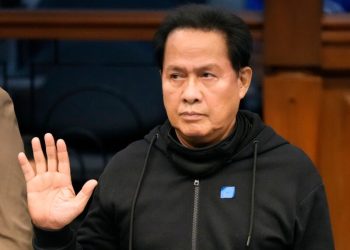
President Bola Tinubu’s Special Adviser on Policy Communication, Daniel Bwala, says key security indicators have improved under the current administration, arguing that Nigerians are “superlatively safer” than they were before 2023.
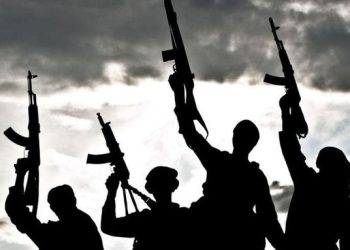
Speaking on Channels Television’s Sunday Politics, Bwala claimed incidents that once dominated headlines—prison breaks and broad-daylight kidnappings in major cities—have “largely stopped” since Tinubu assumed office.
“Before 2023, there were prison breaks everywhere in Nigeria—even here in Abuja. In broad daylight, they would come and kidnap people,” Bwala said. “After [Tinubu] became president, we have not had prison breaks. People are going about their businesses all over the country. We see skirmishes of insecurity every now and then, which is usual.”
Bwala also drew a comparison with crime in developed nations, contending that Nigeria’s insecurity is frequently exaggerated. “If you look at the crime record now, the crimes that are committed in America in one day are more than the ones committed in Nigeria,” he said, without citing specific figures.
Addressing recent allegations by a group of U.S. lawmakers led by Senator Ted Cruz that Nigeria is enabling a “Christian genocide,” Bwala dismissed the claim as “an orchestrated agenda” driven by domestic actors with political motives. He alleged that the lawmakers’ brief relied heavily on a report from a local civil society group he linked to the proscribed Indigenous People of Biafra (IPOB).
“This report was written by the Inter Liberty Civil Society and Rule of Law… You will know that this is a pure case of agenda, and it has IPOB backing,” he said.
Bwala suggested the controversy intensified after Vice President Kashim Shettima’s speech at the United Nations General Assembly in September, arguing that Nigeria’s growing diplomatic visibility has attracted political pushback abroad.
Reiterating the administration’s approach, Bwala said the federal government is pursuing “sustained reforms and strategic interventions” to consolidate gains against banditry, terrorism and kidnapping, while urging the public to acknowledge improvements. “Insecurity is not tied to any faith or group. No religion is being targeted,” he said. “What we are seeing is a gradual improvement in law and order, and Nigerians can see that their country is becoming safer.”
Bwala did not provide nationwide trend data, and independent verification of some claims remains challenging given uneven reporting from hard-hit rural areas. Still, his remarks underscore the Tinubu administration’s effort to frame security as a bright spot amid wider economic pressures and to counter mounting international scrutiny of Nigeria’s human rights and conflict narratives.