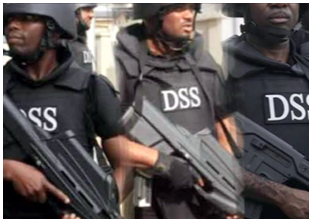
ABUJA — The Director-General of the Department of State Services, Oluwatosin Ajayi, has directed operatives of the agency not to arrest anyone over civil disputes, saying the secret police must draw a clear line between civil disagreements and criminal conduct.
Ajayi disclosed the directive in a media interview published on Thursday, where he said the order formed part of broader reforms introduced under his leadership to strengthen the rule of law, improve accountability and address public concerns about the agency’s human rights record.
According to him, the reforms are built around five broad areas: law enforcement, inter-agency cooperation, accountability, respect for human rights, and infrastructural and administrative improvements. He said his experience in the service showed that security agencies had sometimes treated civil matters as criminal cases, leading to avoidable use of force.
“You cannot apply the use of force in civil matters. Even some criminal matters don’t require force,” Ajayi said.
The DSS boss said the agency would increasingly seek legal interpretation through the courts where disputes involve constitutional or civil questions. He cited the case involving political economist Prof. Pat Utomi over allegations linked to an attempt to establish a “shadow government,” saying the DSS chose to approach the court rather than arrest him.
Ajayi also referred to the case involving the Socio-Economic Rights and Accountability Project, SERAP, after the organisation alleged that DSS operatives invaded its Abuja office. He said the matter was handled through legal channels without arrests. Court reports showed that an FCT High Court later awarded N100 million in damages and N1 million in litigation costs to two DSS operatives who sued SERAP for defamation over the allegation.
Asked whether the agency would now rely on the courts in civil matters, Ajayi answered in the affirmative, insisting that he had instructed personnel to avoid arrests in such cases.
“I have told my people that there should be no arrest in any civil case,” he said. He added that even in cases involving journalists, the agency would prefer to seek judicial remedies or correction where necessary rather than resort to arrest.
Ajayi described journalists as professional colleagues of intelligence officers, saying both groups work with information, though for different audiences.
“The only difference is that, while you inform the public, we inform the government,” he said, noting that intelligence information remains classified until officially declassified.
The directive comes amid long-running public concern over the role of security agencies in disputes involving politics, media, civil society and private individuals. Rights groups have repeatedly accused Nigerian security institutions of using arrest powers in matters that should be resolved through civil litigation.
Ajayi’s remarks suggest an attempt to reposition the DSS as a law-driven intelligence service rather than a force used to settle non-criminal disputes. The test, however, will be whether the directive is consistently enforced across commands and reflected in the agency’s future engagements with citizens, journalists and civil society organisations.