ABUJA, Nigeria — Jihadist violence surged sharply across the borderlands linking northwestern Nigeria, southwestern Niger and northern Benin in 2025, according to a new analysis by the Armed Conflict Location & Event Data Project (ACLED), which says the area is no longer just a spillover zone but an increasingly connected conflict theater. ACLED said the borderlands now form “a connected conflict zone, although with distinct dynamics in each country.”
From 2024 to 2025, the number of violent events involving jihadist groups in the three-country border area rose by about 80%, while reported deaths more than tripled to over 1,000, according to ACLED and Associated Press reporting on the findings. ACLED senior analyst Héni Nsaibia said the violence has entered a new phase, with militants not only expanding but also entrenching their presence.
In Nigeria, ACLED said violent events involving jihadist actors in Sokoto, Kebbi, Niger and Kwara states rose by 86% in 2025. That trend has been visible on the ground: Reuters reported this month that suspected jihadists killed about 170 people in Woro village in Kwara State, one of the deadliest attacks in the area this year and a sign that militant activity is pushing farther south toward the Kainji forest corridor.
In Benin, ACLED said the pattern was less constant but often deadlier, with cross-border raids helping make 2025 the deadliest year on record there for jihadist violence. In Niger, ACLED said both JNIM and Islamic State Sahel Province (ISSP) have been consolidating and expanding, including with operations closer to Niamey, the capital. The report highlights the role of multiple militant factions operating across West Africa, including Jama’at Nusrat al-Islam wal-Muslimeen (JNIM), Boko Haram, Islamic State West Africa Province (ISWAP) and ISSP. ACLED’s analysis suggests their activities are increasingly shaped by weak border control, uneven military coordination and local governance gaps that allow armed groups to move, regroup and recruit across frontiers.
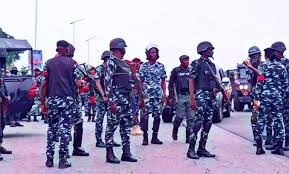
Governments in the region have struggled to contain the spread. In late December 2025, the United States and Nigeria carried out joint strikes on Islamic State-linked camps in northwestern Nigeria, an operation publicly backed by President Donald Trump and Nigeria’s government. Reuters reported the strikes reflected growing U.S.-Nigeria security cooperation amid concern over the expanding extremist threat.
ACLED’s conclusion is stark: the Benin-Niger-Nigeria frontier is no longer a peripheral battleground, but one of West Africa’s most volatile emerging conflict zones.