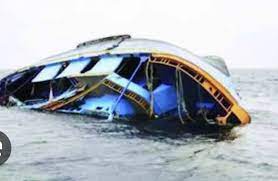
At least 102 people have been rescued and seven bodies recovered after a boat carrying more than 200 migrants capsized off northwest Gambia, President Adama Barrow said in a state broadcast, as emergency teams and local volunteers continued searching for dozens believed missing.
Barrow said some survivors were receiving urgent medical treatment and confirmed the government had activated a national emergency response plan to intensify rescue efforts and support those pulled from the water. “The national emergency response plan has been activated and the government has deployed adequate resources to intensify efforts and provide assistance to the survivors,” he said.
The incident occurred Wednesday near the village of Jinack in Gambia’s North Bank region, according to the Associated Press. Search-and-rescue operations have involved emergency services, but also local fishermen and volunteers who joined the effort in coastal waters and along nearby sandbanks.
Authorities have not provided a definitive cause of the capsize. Gambia’s Ministry of Defence said the vessel was found “grounded on a sandbank,” without detailing whether weather, overcrowding, engine failure or navigation issues contributed to the disaster.
In his address, Barrow offered condolences to bereaved families, promised a full investigation and described the tragedy as a stark warning about the dangers of irregular migration. He said the government would strengthen efforts to prevent irregular journeys and expand “safer and more dignified opportunities” for young people.
The capsize underscores the high-risk Atlantic migration corridor running along West Africa’s coastline through Gambia, Senegal and Mauritania, commonly used by migrants attempting to reach Spain’s Canary Islands. The route is widely regarded as one of the world’s deadliest because vessels are often overloaded and unseaworthy, while conditions in the open Atlantic can rapidly deteriorate.
A recent report by Spanish NGO Caminando Fronteras said at least 3,090 people died trying to reach Spain by sea in 2025 (a figure it said was lower than 2024), highlighting how tighter enforcement can push migrants into longer and more dangerous crossings.
As the search continues off Jinack, officials urged coastal communities to keep assisting responders with information and manpower, while warning residents to avoid approaching debris or fuel slicks without guidance from rescue teams.