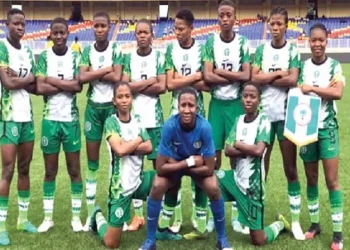
Fresh questions have emerged over Nigeria’s failure to qualify for the 2026 FIFA World Cup, following reports that FIFA officials had raised concerns about DR Congo goalkeeper Lionel Mpasi’s international eligibility before the dispute over Nigeria’s protest was resolved.
The controversy has shifted attention beyond the Super Eagles’ defeat to the Democratic Republic of Congo (DR Congo), towards how the Nigeria Football Federation (NFF) presented its complaint and how football’s governing body handled the case.
Nigeria’s World Cup hopes ended in Rabat, Morocco, on November 16, 2025, when DR Congo won the African play-off final 4–3 on penalties. The match finished 1–1 after extra time, leaving the Super Eagles out of the qualification race.
Mpasi, who was born in France and previously represented the country at youth level, became central to the dispute over whether he had completed the required process to switch his international allegiance to DR Congo.
Reports published in October 2026, citing documents examined by journalists, said FIFA’s legal officials had identified problems with the goalkeeper’s change of association. The reported findings have raised questions about why the matter did not result in a sporting penalty for DR Congo.
The NFF had challenged the eligibility of several Congolese players after the defeat, citing alleged irregularities involving nationality and passport documentation. In March 2026, FIFA’s Disciplinary Committee rejected the petition, and the Nigerian federation announced that it would appeal.
Fresh reports have since suggested that procedural problems contributed to the rejection. These included an allegation that the NFF sent its complaint to the wrong email address instead of using the designated legal channel. The account has been attributed to a source familiar with the matter, and the NFF’s response to the latest reporting remained outstanding.
The distinction is important: reports about internal concerns over Mpasi’s paperwork do not amount to a public ruling reinstating Nigeria or overturning the result. FIFA’s disciplinary process rejected the NFF’s original petition, while the federation said it was dissatisfied with that decision.
DR Congo subsequently defeated Jamaica in the intercontinental play-off to secure a place at the World Cup. The team went on to reach the knockout stage before losing 2–1 to England.
The case has also prompted discussion about the financial consequences of Nigeria missing the tournament. However, reports of possible compensation should not be treated as confirmation that FIFA has agreed to pay the country or that any settlement has been reached.
For the NFF, questions remain over the status of its appeal and the handling of the original submission. The dispute has renewed scrutiny of both the federation’s procedures and FIFA’s response, but it has not changed Nigeria’s qualification outcome.
Until the relevant authorities provide further clarification, the eligibility controversy remains unresolved in the public debate, rather than a decision that has restored Nigeria’s place at the tournament.