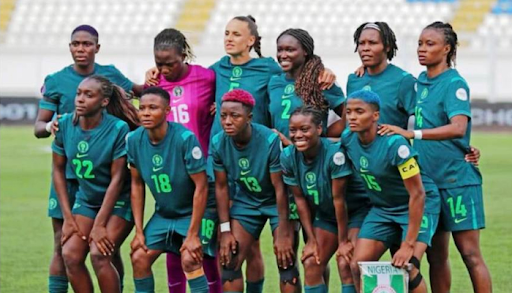
ABUJA — Nigeria’s failure to reach the 2027 Women’s World Cup has prompted the Nigeria Football Federation to launch a formal review, with a committee assigned to investigate what went wrong and recommend ways of preventing a repeat.
The decision follows a turbulent Women’s Africa Cup of Nations campaign in Morocco. The Super Falcons, holders of the continental title and the most successful team in African women’s football, lost to Cameroon in the quarter-finals before their hopes of reaching the World Cup were ended by a 2-1 defeat against South Africa in the qualifying play-off.
That result ended Nigeria’s remarkable record of appearing at every Women’s World Cup since the inaugural tournament in 1991. The Falcons will consequently be absent when Brazil hosts the 2027 edition.
The NFF announced the review on Friday, saying the panel would assess the recent setbacks involving the national teams and identify measures that could strengthen Nigeria’s performance at international level.
“The committee will investigate the setbacks and make recommendations.”
The five-member committee will be headed by Ambassador Fanny Amun, MON. Former Nigeria internationals Ladan Bosso, Desire Oparanozie and Mutiu Adepoju are among the members, while Dr Alex Mana will also serve on the panel. Nasiru Jibril has been appointed secretary.
According to the federation, the exercise will take a broader look at Nigeria’s recent international football difficulties rather than concentrating exclusively on the Falcons’ failed World Cup campaign.
The investigation comes amid mounting disappointment within the team. Head coach Justine Madugu has apologised for the failure and taken responsibility for the outcome, while members of the squad have spoken of their frustration at missing the global competition.
The committee’s findings could have implications for the preparation and administration of Nigeria’s national teams, including technical planning and future competition strategies.
For the Super Falcons, the consequence is already clear. A team that had never missed a Women’s World Cup since the tournament began will now watch the 2027 competition from home, bringing an end to one of Nigeria’s longest-standing records in international football.