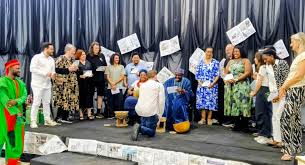
Nigeria has made history by hosting Africa’s first Playback Theatre Festival, a landmark cultural event aimed at promoting storytelling, dialogue, healing and community engagement through performance art.
The festival brought together theatre practitioners, educators, facilitators and performers from across Africa and beyond to explore the transformative power of playback theatre, an interactive form of performance in which actors spontaneously recreate stories shared by audience members.
Organisers described the gathering as a major step in expanding the reach of playback theatre across the continent and creating a platform for cultural exchange and social connection.
“This festival marks a significant milestone for playback theatre in Africa.”
Participants engaged in workshops, live performances, panel discussions and training sessions focused on using theatre as a tool for personal expression, conflict resolution and community development.
Playback theatre encourages audience members to share real-life experiences, emotions and memories, which are then interpreted and enacted on stage by performers. Advocates say the approach fosters empathy, understanding and collective reflection.
The event attracted delegates from several countries, providing an opportunity for artists and practitioners to exchange ideas and strengthen professional networks.
Organisers noted that the festival was designed not only to celebrate artistic creativity but also to highlight the role of storytelling in addressing social issues and promoting inclusion.
“We are creating spaces where people can be heard, understood and connected through shared experiences.”
Cultural stakeholders praised Nigeria for pioneering the initiative, describing it as an important contribution to the development of alternative theatre forms on the continent.
Experts at the festival discussed the growing relevance of playback theatre in education, mental health support, peacebuilding and community engagement, particularly in societies dealing with social and cultural challenges.
Attendees also explored ways of expanding access to the art form through training programmes and collaborative projects across Africa.
The festival concluded with calls for greater investment in community-based arts initiatives and stronger partnerships among theatre practitioners throughout the region.
Organisers expressed optimism that the event would become a recurring platform for creative exchange and professional development, helping to establish playback theatre as a recognised and impactful movement across Africa.
With Nigeria hosting the inaugural edition, participants said the festival has laid the foundation for future collaborations that could strengthen storytelling traditions and promote deeper human connections through performance.