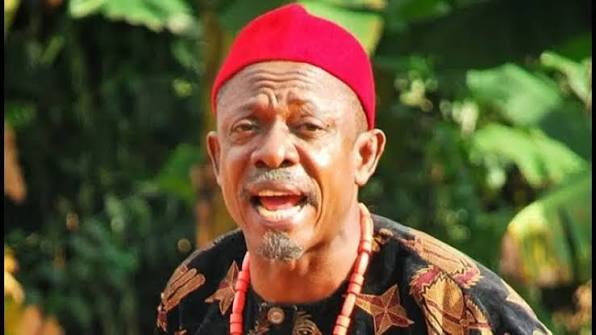
Nollywood veteran Nkem Owoh has sought to clear up the controversy surrounding his comments on the beginnings of Nigeria’s movie industry, saying he never credited Yoruba filmmakers with founding Nollywood.
The actor, fondly called Osuofia, explained that his earlier remarks concerned the history of home-video production and the contributions Yoruba filmmakers made before Nollywood became widely recognised.
He spoke during an appearance on Curiosity Made Me Ask, a YouTube programme presented by comedian Adebayo Abidemi, popularly known as Bae U.
The interview, released on Saturday, November 7, brought renewed attention to the debate over the origins of Nigeria’s film industry.
Owoh said his position had been misunderstood, stressing that the country’s filmmaking activities existed long before Nollywood became an established name.
He explained that the name emerged after discussions among people working within the industry.
The veteran actor maintained that Yoruba practitioners were already producing entertainment for home audiences during the industry’s earlier years.
To illustrate his point, he recalled watching works associated with Hubert Ogunde and Adebayo, whom he identified among the influential figures of that period.
At one point during the conversation, Bae U jokingly suggested that Ogunde was Igbo.
Owoh promptly corrected him, explaining that the celebrated theatre and film pioneer was Yoruba.
The exchange formed part of his broader argument that recognising the achievements of early Yoruba filmmakers should not be confused with claiming they founded the entire Nollywood industry.
His explanation followed earlier disagreements about the roles played by Yoruba and Igbo practitioners in developing Nigeria’s commercial film business.
In August 2026, the late actor Francis Duru had attributed an important part of modern Nollywood’s development to Igbo entrepreneurs.
Duru’s comments focused particularly on the growth of commercial home-video production during the 1990s and early 2000s.
He also acknowledged Yoruba filmmakers’ contributions, including their efforts to organise and promote their productions.
Nigeria’s cinema history, however, stretches back beyond the commercial home-video expansion of that period.
Long before Nollywood became internationally recognised, Yoruba theatre practitioners such as Hubert Ogunde and Duro Ladipo had built performance traditions that influenced subsequent film productions.
The release of Living in Bondage in 1992 marked another significant stage in the industry’s development.
Produced by Kenneth Nnebue, the Igbo-language film became closely associated with the expansion of Nigeria’s commercial home-video market.
These different developments reflect the contributions of several generations of Nigerian entertainers, filmmakers and entrepreneurs.
For Owoh, the distinction remains important: acknowledging Yoruba filmmakers’ early involvement in home-video entertainment does not mean assigning them sole responsibility for creating Nollywood.
His clarification places the focus on their contributions while recognising that Nigeria’s film industry developed through several stages.