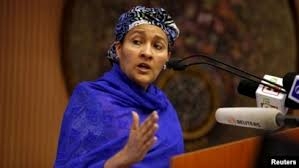
United Nations Deputy Secretary-General, Amina Mohammed, has called on African leaders to take decisive action in shaping how emerging technologies are deployed, warning that passivity could leave the continent more vulnerable to terrorism and instability.
Speaking at the 2025 Africa Chiefs of Defence Staff Summit in Abuja on Monday, Mohammed emphasized that insurgent groups were already leveraging advanced tools to intensify violence across the region.
“Africa is at the epicentre of global terrorism. In this new era of technology, where it should be advancing as a human endeavour, these insurgency groups are using new technologies and improvised explosive devices to wreak havoc.
We cannot afford to be bystanders. Africa must take ownership, must be proactive, and shape how these tools will be used,” she said.
She warned that digital platforms and artificial intelligence (AI) are increasingly weaponized to manipulate elections, spread disinformation, and deepen divisions.
“Elections are manipulated, institutions undermined, and lies are spread until neighbour turns against neighbour. We have seen this before. Once it was a radio carrying messages to ignite genocide; today, social media amplifies hate at terrifying speed. Artificial intelligence is already transforming the landscape of security,” Mohammed noted.
At the same time, she highlighted the opportunities technology offers for peace and development.
“Artificial intelligence is being deployed in conflict-ridden countries to identify food insecurity, predict displacement caused by climate shocks, and even detect and clear landmines. Soon, they could help us to spot patterns of unrest before violence erupts. Sadly, the same technology that offers solutions also carries profound risks,” she cautioned.
Stressing the need for unity, Mohammed said Africa’s security future hinges on collaboration rather than fragmented action.
“When we act in isolation, we hand our adversaries their greatest advantage, our division. Regional cooperation is the linchpin of Africa’s security and defence. But we also know this is easier said than done.
Defence collaboration is not simple; we are talking about 54 countries, each with its own policies, histories, priorities, and difficulties. This makes it all the more remarkable that, through the complexity and diversity, African forces still find ways to act together,” she said.
Her remarks underscored a critical message for African governments and private sector leaders alike: technology can either entrench insecurity or become a catalyst for resilience — depending on how the continent chooses to engage with it.