

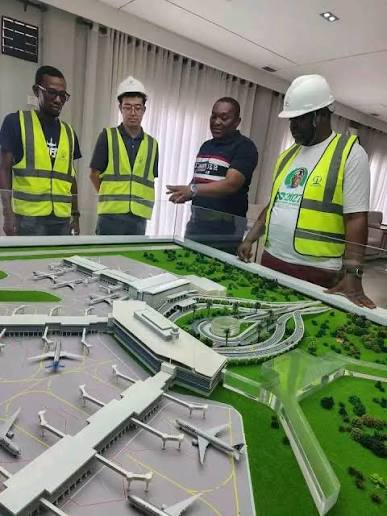
LAGOS, NIGERIA — The Federal Government has approved the design of a proposed five-station monorail connecting Ikeja Railway Station to Murtala Muhammed International Airport (MMIA), marking a significant step towards improving transportation and reducing dependence on congested roads around Nigeria’s busiest aviation gateway.
Minister of Aviation and Aerospace Development Festus Keyamo announced the approval on Tuesday, October 20, following a technical review involving senior government officials and engineering teams.
The meeting included the Permanent Secretary of the Federal Ministry of Aviation, Federal Airports Authority of Nigeria (FAAN) Managing Director Olubunmi Onabanjo-Kuku and engineers from both organisations.
According to Keyamo, the monorail will connect directly with the Lagos Red Line railway at Ikeja, providing passengers with a rail-based alternative for reaching the airport.
The approved design identifies five stations: Ikeja Station, Domestic Airport Station, Beesam Station, Toll Gate Station and MMIA Airport Station.
The proposed route will terminate at the international airport’s Terminal 1, which is currently undergoing major reconstruction.
Keyamo described the rail connection as an integral component of the airport’s modernisation programme, aimed at strengthening its position as a major international transport hub.
The development follows earlier discussions between the Federal Government and Lagos State authorities over extending rail services to the airport’s domestic and international terminals.
In June, Keyamo disclosed plans to integrate airport transportation with Lagos’s expanding urban railway network.
FAAN has since continued discussions on financing the proposed connection.
Speaking at the World Aviation Festival in Lisbon on October 18, Onabanjo-Kuku indicated that arrangements for financing the project had reached an advanced stage, although the final structure remained under consideration.
The proposed monorail could improve travel convenience for passengers, airport employees and businesses operating around the aviation corridor.
It could also reduce pressure on surrounding roads if completed and integrated effectively with existing public transport services.
However, critical project details remain outstanding.
The government has not disclosed the estimated construction cost, funding commitments, contractor selection, commencement date or completion timeline.
The announcement therefore represents design approval rather than confirmation that construction has begun.
The project forms part of broader efforts to modernise Lagos airport infrastructure, improve passenger movement and strengthen connections between air and rail transportation.
Attention now turns to financing, procurement and implementation as authorities seek to translate the approved design into a functioning airport rail service.



















