

SEOUL/PYONGYANG
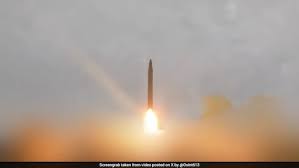
North Korea has confirmed that it test-fired an intermediate-range strategic ballistic missile into waters off its east coast, with leader Kim Jong Un personally overseeing the launch as military tensions on the Korean Peninsula intensify. South Korea’s Joint Chiefs of Staff initially detected the missile travelling from the Wonsan area on North Korea’s eastern coast toward the East Sea, also known as the Sea of Japan. Seoul estimated that the projectile travelled more than 700 kilometres before falling into the sea.
Japan’s Defence Ministry provided a slightly different assessment, saying the missile was launched at approximately 6:36 a.m., reached a maximum altitude of about 90 kilometres and travelled roughly 680 kilometres. Tokyo said it landed outside Japan’s exclusive economic zone and that there were no reports of damage to aircraft or ships.
North Korea subsequently confirmed the launch through state media, describing it as a test of an intermediate-range strategic missile system intended to strengthen its nuclear deterrent.
Pyongyang claimed the missile struck a designated sea target about 1,000 kilometres away and said the exercise involved a hypersonic strategic weapon system. The difference between North Korea’s claimed distance and estimates from South Korean and Japanese authorities has not been independently reconciled. Kim Jong Un supervised the drill and called for continued improvements to the reliability and destructive capability of North Korea’s strategic weapons, according to state news agency KCNA.
His sister and senior ruling-party official Kim Yo Jong claimed the weapon can follow what she called a “wave-like trajectory” designed to complicate interception. She also said artificial-intelligence technology allows the missile to alter its flight path at low altitude. Those technical claims have not been independently verified. The launch comes amid renewed tension between the two Koreas following a September landmine explosion in the Demilitarized Zone that injured South Korean soldiers. Seoul and the United Nations Command blamed North Korea and called for accountability, while Pyongyang rejected the accusation as groundless.
South Korean President Lee Jae Myung had only days earlier appealed for dialogue and rebuilding trust while simultaneously announcing plans to strengthen missile defence and other military capabilities. North Korea has conducted more than 10 missile tests during 2026, maintaining its rapid weapons-development programme despite United Nations Security Council resolutions prohibiting its ballistic-missile activities. Japan strongly condemned Saturday’s launch and lodged a protest with Pyongyang.
The latest test therefore represents both another advance in North Korea’s missile programme and a fresh challenge to efforts to reduce tensions on the Korean Peninsula.



















