BUNIA, DR Congo — Health authorities in the Democratic Republic of Congo have begun vaccinating healthcare and other frontline workers in Ituri province as the country battles its deadliest recorded Ebola outbreak.
The campaign, launched on Saturday in Bunia, is using the Ervebo vaccine, which has proved effective in previous outbreaks caused by the more common Zaire strain of Ebola. The current outbreak, however, is caused by the rarer Bundibugyo virus, for which there is no licensed vaccine or approved treatment.
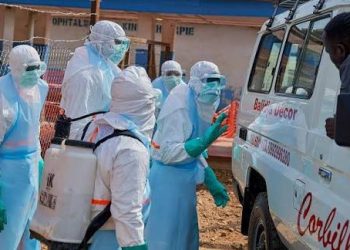
Health workers are being prioritised because they face high exposure while treating patients, conducting surveillance, supporting burials and working in treatment centres. Nikole Landu, a healthcare worker who received the vaccine, said she chose to be vaccinated because she is in constant contact with sick people and is at high risk.
“The vaccine I received today will help protect me,” she said. “I might still get the disease, but I’m less likely to develop a severe case.”
Health officials say Ervebo may offer some protection because the Zaire and Bundibugyo viruses are related, but whether it can prevent illness from Bundibugyo Ebola is still being studied. The vaccine is being used under a compassionate-use programme, which allows a medical product to be used in a serious disease emergency even when it has not been approved for that specific use.
The rollout is targeting the Bunia and Mongbwalu health zones in Ituri, among the areas hardest hit by the outbreak. As of Saturday, government figures showed 7,541 confirmed cases, including 3,639 deaths, while 1,823 people had recovered.
Ituri’s military governor, Maj. Gen. Gaby Kasongo Mulumba, said the vaccination drive was focused on frontline workers because they are “particularly exposed and deeply involved in the response.” He was also vaccinated in Bunia and urged communities to support the campaign.
The outbreak is spreading in extremely difficult conditions, including insecurity, displacement, intense population movement and a strike by some health workers. The World Health Organization has described the situation as serious, noting encouraging signs in parts of Ituri but warning that transmission continues in other areas.
WHO and Africa CDC previously approved 70,000 doses of Ervebo for DR Congo. About 50,000 doses are intended for frontline and health workers, while 20,000 doses will be used in a clinical trial to assess whether the vaccine protects against Bundibugyo Ebola.
The vaccine had earlier been rolled out in Kisangani, in Tshopo province, with campaigns planned across several affected health zones in Tshopo, Bas-Uélé and Haut-Uélé.
For Congolese health authorities, the vaccination campaign offers a critical layer of protection for those at greatest risk. But officials say vaccines alone will not end the outbreak without faster case detection, safe isolation, community trust and secure access to affected areas.