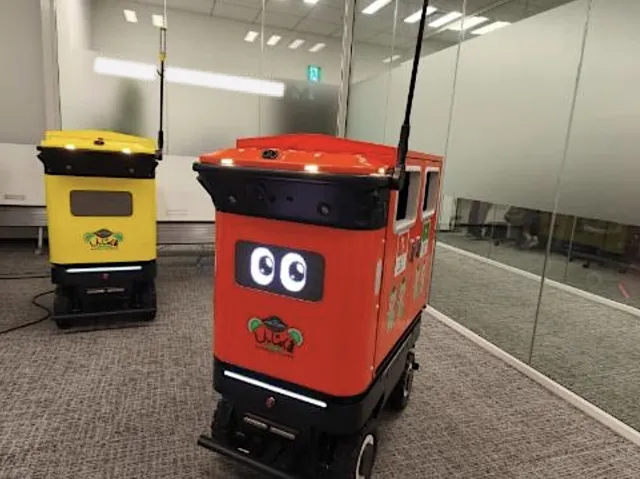
TOKYO — Japan’s East Japan Railway Company, JR East, has begun testing mobile robotic rubbish bins at Tokyo’s Shinjuku Station, one of the world’s busiest transport hubs, as the operator looks for new ways to reduce cleaning workloads and improve passenger convenience.
The trial began on September 8 and is scheduled to run until November 20, 2026, on weekdays between 10 a.m. and 5 p.m. The robots are operating on the first basement-level paid concourse at Shinjuku Station, where they move automatically through designated areas to collect rubbish from passengers.
JR East said the experiment is intended to test whether autonomous rubbish bins can operate safely in a crowded station environment while easing pressure on sanitation staff. Shinya Kawamichi, a JR East research official, said the company wanted to see how well such a robot could move automatically and safely in a complex setting like Shinjuku Station.
The mobile bins are designed to make waste disposal easier for passengers, particularly in a station where fixed rubbish bins have been reduced in recent years for cleanliness and security reasons. In some parts of the station, traditional bins must be emptied manually more than 10 times a day, adding to the workload of station and cleaning staff.
Japanese media reported that the robots patrol the paid concourse area and can travel toward waste collection points after receiving rubbish. Their design also makes them easier for passengers to spot, addressing a common frustration in Japanese railway stations where public bins can be difficult to find.
Shinjuku Station is a demanding test site because of its heavy passenger flow, complex underground layout and constant movement of commuters, tourists and railway staff. JR East is expected to assess whether the robots can avoid obstacles, operate without disrupting pedestrians and collect enough rubbish to justify wider deployment.
The trial also reflects Japan’s wider use of robotics in transport, retail and public services as companies respond to labour shortages and rising expectations for efficiency. Robots have already been tested in stations for guidance, cleaning and security support, but a moving rubbish bin in a crowded concourse presents a different challenge.
For passengers, the robots may appear like a small novelty. For railway operators, however, they could become part of a broader shift toward automation in daily station management.
If the Shinjuku trial proves successful, JR East could consider expanding similar mobile rubbish-bin systems to other major stations, especially in areas where fixed bins are limited and cleaning staff face heavy collection demands.