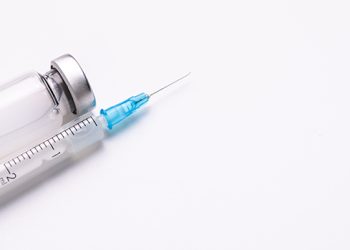
KINSHASA — More than 16,000 doses of the Ervebo Ebola vaccine have arrived in the Democratic Republic of Congo as health authorities battle the deadliest Ebola outbreak in the country’s history.
The first shipment was delivered late Friday at Kinshasa’s N’djili International Airport, where Health Minister Samuel Roger Kamba received the consignment. Local and international reports put the first batch at between 16,250 and 16,520 doses, part of a larger emergency allocation intended to support the response to the rapidly expanding outbreak.
The World Health Organization said the DRC has been allocated 70,000 doses of Merck’s Ervebo vaccine through the International Coordinating Group on Vaccine Provision. Of those, 20,000 doses are reserved for a Phase 3 clinical trial to assess whether the vaccine offers protection against the Bundibugyo virus, while 50,000 doses are intended for frontline and health workers.
The deployment comes with scientific uncertainty. Ervebo is licensed for the Zaire strain of Ebola, not the Bundibugyo strain driving the current outbreak. WHO experts say evidence of cross-protection remains limited, although early data, including from animal studies, suggest the vaccine may offer some protection.
Kamba said Ervebo had already been used successfully during previous Ebola responses, including the large 2018–2020 outbreak in eastern Congo. But he acknowledged that the current emergency is more complex because it is spreading in northern and eastern regions where state presence is weak, health infrastructure is limited and armed groups have operated for decades.
The outbreak, declared on May 15, is believed to have been spreading for weeks before it was officially detected. Congolese authorities say it has killed 2,516 people out of 5,290 confirmed cases, making it the country’s worst Ebola epidemic on record.
“This outbreak is growing exponentially,” Julien Harneis, the UN’s senior Ebola coordinator, warned on Friday.
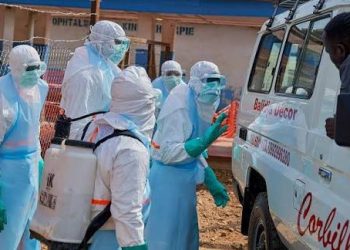
WHO has said the current outbreak has already surpassed the 2018–2020 epidemic in confirmed cases, making it the largest Ebola outbreak documented in the DRC. Response teams are working on surveillance, laboratory testing, infection prevention, clinical care, community engagement and logistics, but insecurity and funding gaps continue to slow containment efforts.
Two vaccines designed specifically for the Bundibugyo strain are already in clinical trial phases, including one being developed by Moderna and another by the University of Oxford. WHO has also described an rVSV Bundibugyo candidate being developed by Hilleman Laboratories as among the most promising options.
For now, health officials say the arrival of Ervebo offers an important tool, but not a guaranteed solution, as the DRC races to slow a fast-moving outbreak.