Doctors Without Borders (MSF) is training healthcare workers in Kenya for deployment to the Democratic Republic of Congo (DRC), where authorities are battling the country’s fastest-growing Ebola outbreak on record.
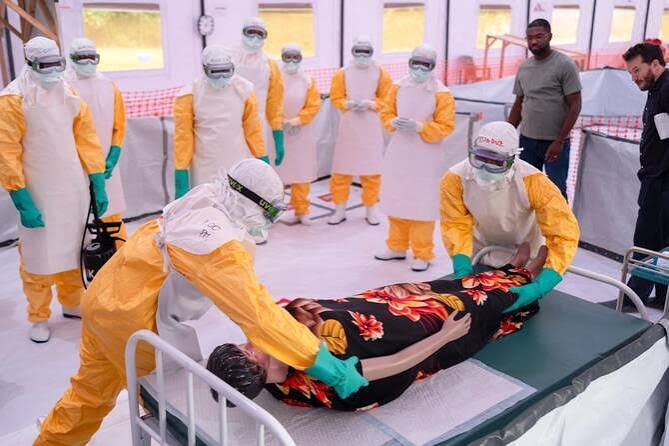
The specialised programme, based at an Ebola simulation centre on the outskirts of Nairobi, is designed to prepare doctors, nurses and emergency responders for the demanding conditions they are likely to encounter while treating Ebola patients. The facility replicates real-life treatment centres, allowing participants to practise infection prevention, patient care and the correct use of personal protective equipment before entering outbreak zones.
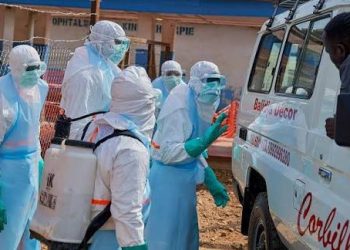
The latest Ebola outbreak in eastern DR Congo has claimed at least 600 lives since it was declared in mid-May, according to African health authorities. The disease has spread rapidly, placing enormous pressure on healthcare facilities and frontline workers. The outbreak involves the Bundibugyo strain of the virus, for which there is currently no approved vaccine.
MSF officials said the training focuses not only on clinical treatment but also on ensuring that health workers can safely operate in high-risk environments where strict infection-control procedures are essential.
Speaking at the training facility in Nairobi, one of the instructors highlighted the intensity of working in an Ebola treatment centre.
“Every movement matters. A small mistake can have serious consequences.”
Participants undergo repeated practical exercises, including safely putting on and removing protective suits, managing suspected Ebola cases and responding to emergency situations while wearing full protective gear.
One trainee described the simulation as physically and mentally demanding but said it was critical for preparing medical personnel for real deployments.
“The training gives us confidence because we know what to expect before we arrive in the field.”
Health experts say simulation-based preparation has become increasingly important as Ebola outbreaks require highly skilled personnel who can work under pressure while protecting themselves and preventing further transmission.
The World Health Organization and humanitarian partners continue to support Congolese authorities as they seek to contain the outbreak through surveillance, contact tracing, patient isolation and community awareness campaigns. However, insecurity, logistical challenges and pressure on health workers have complicated response efforts in affected areas.
MSF said strengthening the capacity of frontline responders is essential to improving the regional response to Ebola and reducing the risk of cross-border transmission. The organisation added that the Nairobi training centre will continue preparing medical teams for rapid deployment as efforts intensify to bring the outbreak under control.