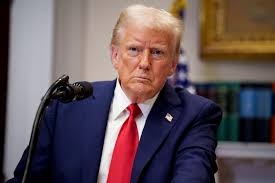
U.S. President Donald Trump has warned that the United States would unleash overwhelming military force against Iran if Tehran were to carry out or attempt an assassination against him, further escalating already strained relations between the two countries.
Trump made the remarks in a post on his Truth Social platform on Friday, following reports that Israel had shared intelligence with Washington alleging a renewed Iranian plot targeting the U.S. president. The warning came amid heightened tensions after recent hostilities between the United States and Iran.
In his message, Trump said he had already directed the U.S. military to prepare a massive response should any assassination attempt linked to Iran succeed. He claimed that about 1,000 missiles had been positioned and were ready for immediate use, with additional military assets available if required.
“If they do assassinate me, they will be completely decimated and destroyed.”
Trump added that military instructions had already been issued and would remain in effect for a year, with the option of extending the directive if necessary.
His comments followed reports of chants calling for his death during funeral events for Iran’s late Supreme Leader, Ayatollah Ali Khamenei. Trump has repeatedly maintained that he remains Iran’s primary target because of decisions taken during his first term in office, including the 2020 U.S. drone strike that killed Iranian General Qassem Soleimani.
Speaking earlier at the NATO Summit, Trump said Iran had long sought revenge against him, describing the country’s leadership as hostile to the United States.
The latest warning came only a day after Trump indicated that Washington was prepared to resume diplomatic talks with Tehran in an effort to reduce tensions. However, his latest statement signalled that the United States would respond with overwhelming force to any attack on its president.
Despite Trump’s remarks, constitutional experts note that any military response following the death of a U.S. president would ultimately be determined by the new commander-in-chief. Under the U.S. Constitution, the vice president would immediately assume the presidency and decide whether to implement any military action.
The White House has not announced any change in U.S. military posture following Trump’s statement, while Iranian officials have not immediately responded publicly to his latest warning.
Relations between Washington and Tehran remain tense following months of military confrontation, diplomatic disagreements and mutual accusations, with regional and international observers closely monitoring developments.