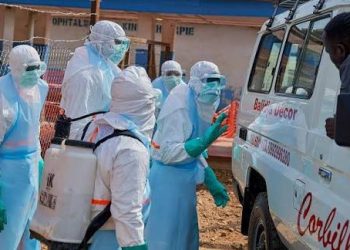
Kenyan authorities have intensified health screening and awareness campaigns for long-distance truck drivers as East Africa remains on high alert over the Ebola outbreak in the Democratic Republic of Congo.
Every day, hundreds of trucks leave Nairobi carrying food, fuel, manufactured goods and other supplies to Uganda, Rwanda, South Sudan and the DRC. The drivers are vital to regional trade, but their constant movement across borders also places them on the frontline of efforts to prevent cross-border transmission.
“We no longer shake hands,” said truck driver Stephen Kihima. “We do fist bumps or just wave, but we don’t fear crossing borders because this is our job.”
The Ebola outbreak, caused by the rare Bundibugyo strain, has continued to expand in eastern Congo. Reuters reported this week that more than 70 health workers have been infected since the outbreak began, underscoring the pressure on the region’s already fragile health system.
So far, the outbreak has been largely concentrated in eastern DRC, but health officials in neighboring countries are strengthening surveillance because of the heavy flow of people and goods across borders. At key crossing points, truck drivers are undergoing temperature checks, health screening and awareness briefings. Kenyan authorities say weekly briefings for drivers will begin at border posts, alongside continued health training.
For many drivers, precautionary measures have become part of daily routine. Kihima said some drivers now travel with their own stoves and food supplies to avoid eating in hotels and roadside restaurants in affected countries.
“Most of us drivers have stopped eating food in those countries,” he said. “We fear that the hotels might have the disease.”
Health experts say information is critical. Samuel Njenga, an infectious disease specialist, said drivers who understand how Ebola spreads are better able to protect themselves, their colleagues and communities.
Ebola spreads through direct contact with the bodily fluids of infected people or contaminated materials. Symptoms can include fever, vomiting, diarrhoea and bleeding.
The International Organization for Migration has warned that Ebola responses must move faster across borders than the virus itself, urging stronger screening and coordination in high-mobility corridors.
Kenya’s Ministry of Health says it is working with regional partners to prevent imported cases while keeping trade routes open.