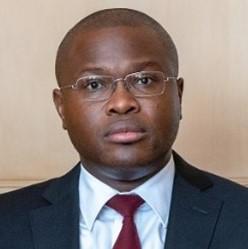
COTONOU, Benin — Former finance minister Romuald Wadagni was sworn in on Sunday as president of Benin, taking over from Patrice Talon and promising to combine economic continuity with stronger action against insecurity in the country’s north.
Wadagni, 49, took the oath of office at the Congress Palace in Cotonou after winning the April 12 presidential election with 94.27 percent of the vote. His only challenger, Paul Hounkpè, received 5.73 percent and conceded defeat after the vote. Benin’s Constitutional Court later confirmed the result.
“I will serve Benin with integrity, courage and commitment,” Wadagni said in his inaugural address. “Power is never a personal privilege.”
Wadagni is widely seen as a continuity candidate after serving for a decade as Talon’s economy and finance minister. Under Talon, Benin recorded strong growth, improved public finances and attracted investor attention, with Wadagni credited by supporters as a key architect of fiscal reforms. Reuters reported that the new president used his speech to acknowledge economic progress while stressing that growth must translate into better living standards, jobs, basic services and social protection.
His election, however, was criticised by opposition figures and rights groups who said the contest took place in a restricted political environment. The main opposition party, The Democrats, was unable to field a candidate after failing to secure the required endorsements, while Talon’s decade in office was marked by accusations of shrinking democratic space and weakening opposition activity.
Wadagni begins a seven-year term following a constitutional reform that extended the presidential mandate from five years. A president may still serve a maximum of two terms.
Beyond the economy, security is expected to be one of his most urgent challenges. Northern Benin has faced growing attacks blamed on jihadist groups expanding from the Sahel, including fighters linked to al-Qaeda’s regional affiliate, Jama’at Nusrat al-Islam wal-Muslimin.
“Benin will not give in to fear nor complacency,” Wadagni said, pledging firm action against those threatening national unity and security.
His administration will also need to manage relations with neighbouring Niger and Burkina Faso, both ruled by military juntas and both facing jihadist violence. Niger’s Prime Minister Ali Mahaman Lamine Zeine attended Sunday’s inauguration, a gesture seen as a possible sign of easing tensions.
For Wadagni, the central test will be whether Benin can preserve its reputation for economic reform while addressing inequality, insecurity and concerns over political openness.