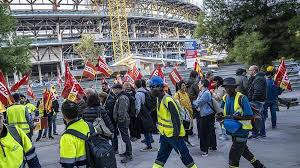
BELGRADE, Serbia — Tens of thousands of people rallied in Serbia’s capital, Belgrade, on Saturday in one of the largest anti-government demonstrations in recent months, demanding early elections and accusing President Aleksandar Vučić’s administration of corruption, repression and democratic backsliding.
The student-led protest filled Slavija Square and surrounding streets under the slogan “Students win,” continuing a movement that began after the deadly 2024 collapse of a train station roof in Novi Sad. The disaster, which killed 16 people, became a symbol of alleged corruption, poor oversight and political impunity under Serbia’s ruling establishment.
Crowd estimates varied widely. Reuters reported that between 34,300 and 100,000 people gathered in central Belgrade, with protesters wearing red handprint badges and carrying banners accusing the authorities of having “bloody hands.” Many demonstrators called for Vučić’s resignation, early parliamentary elections and stronger rule of law.
The main rally was largely peaceful, but clashes broke out later near a pro-government camp outside the presidency building. Police said groups of protesters threw objects at officers, while riot police responded with pepper spray and anti-riot vehicles. Interior Minister Ivica Dačić said 23 people were detained and some officers were injured.
Protest organisers accused the government of trying to limit turnout by restricting transport into Belgrade, including halting some trains. Authorities denied political motives, while pro-government media described the rally as an attempt to destabilise the country.
Vučić, who was reportedly travelling to China, dismissed the protesters as extremists and accused opposition forces of encouraging violence. His critics say the demonstrations reflect deeper public anger over corruption, pressure on independent media, alleged police brutality and the concentration of power around the presidency.
The movement has grown from a student protest into a wider political challenge involving civil society groups, opposition parties and ordinary citizens frustrated with Serbia’s direction. Students have said they plan to contest elections expected between September and November 2026, raising the prospect of a more organised challenge to Vučić’s Serbian Progressive Party.
The unrest has also drawn international attention. The European Union has warned that Serbia’s democratic decline could affect funding and its long-stalled path toward EU membership.
For many protesters, the rally was about more than the Novi Sad tragedy. It was a demand for accountability, fair elections and an end to what they describe as years of political intimidation. For Vučić, it represents one of the most serious street-level challenges to his rule in years.