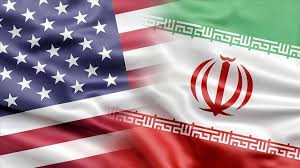
The United States and Iran opened rare high-level direct talks in Islamabad on Saturday, with the negotiations aimed at preserving a fragile two-week ceasefire after six weeks of war that has killed thousands, jolted global energy markets and pushed the wider Middle East closer to a regional breakdown. The American delegation was led by Vice President JD Vance, while Iran’s team was headed by Parliament Speaker Mohammad Bagher Qalibaf. Both delegations also met Pakistani Prime Minister Shehbaz Sharif separately, underlining Pakistan’s unexpected emergence as a key intermediary in one of the most consequential diplomatic efforts in the region in decades.
The talks were direct and face-to-face, not merely conducted through intermediaries, according to Reuters and the Associated Press. After roughly 14 hours of negotiations, the two sides paused without a final deal, though they agreed to keep exchanging documents through technical teams. The talks are the highest-level direct contact between Washington and Tehran since Iran’s 1979 Islamic Revolution, a measure of both the scale of the crisis and the urgency of preventing a return to full-scale war.
But the diplomacy is already under strain from fighting beyond Iran itself, especially in Lebanon. Reuters reported that Iran has been coordinating with Lebanese officials to ensure ceasefire commitments are respected “on all fronts,” while also insisting that Israeli attacks in Lebanon must be addressed as part of any durable settlement. That demand has collided with the U.S. and Israeli position that a truce with Iran does not automatically extend to Hezbollah. More than 90 people have been killed in Israeli strikes in Lebanon during the latest phase of the conflict, Reuters reported, showing how easily the broader deal could unravel.
Another major fault line is the Strait of Hormuz, the strategic waterway that carries roughly a fifth of globally traded oil and gas. Reuters reported that the U.S. military has begun setting conditions to clear mines and reopen shipping lanes, while Iran disputes American claims that the waterway is effectively being restored. Some tanker traffic has resumed, including three supertankers that transited the strait on Saturday, but normal maritime confidence remains far from restored. The disruption has sent oil prices sharply higher and underscored just how much leverage Tehran still holds.
For now, Islamabad has delivered a diplomatic breakthrough simply by getting both sides into the same room. But with disagreements still sharp over sanctions relief, nuclear restrictions, Lebanon and control of Hormuz, the talks have opened a path to de-escalation without yet securing peace.