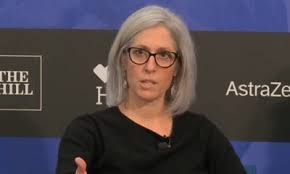
The Trump administration has dismissed Susan Monarez, head of the Centers for Disease Control and Prevention (CDC), following a tense standoff with Health Secretary Robert F. Kennedy Jr., a well-known vaccine skeptic.
Monarez, a veteran health scientist, had only been CDC director for less than a month when the Department of Health and Human Services (HHS) announced on X that she “is no longer director.”
Her lawyers, however, insisted she never resigned.
“As a presidential appointee, senate confirmed officer, only the president himself can fire her,” her legal team said, rejecting the dismissal as “legally deficient.”
The White House later confirmed her termination, with spokesperson Kush Desai saying:
“As her attorney’s statement makes abundantly clear, Susan Monarez is not aligned with the President’s agenda of Making America Healthy Again. Since Susan Monarez refused to resign despite informing HHS leadership of her intent to do so, the White House has terminated Monarez from her position with the CDC.”
Monarez’s lawyers countered that she was “notified tonight by a White House staffer in the personnel office that she was fired,” but stressed she legally remained CDC Director.
They further accused Kennedy of “weaponizing public health for political gain and putting millions of American lives at risk.”
The fallout did not stop with Monarez’s dismissal. At least five senior CDC officials resigned, according to a union representing over 2,000 workers.
“Many felt forced to walk away from the jobs they loved because politics left them no choice,” AFGE Local 2883 said in a statement, adding: “Vaccines save lives.”
Among the officials who resigned were Demetre Daskalakis, director of the CDC’s National Center for Immunization and Respiratory Diseases, who wrote on X:
“I am unable to serve in an environment that treats CDC as a tool to generate policies and materials that do not reflect scientific reality and are designed to hurt rather than to improve the public’s health.”
Other high-profile resignations included Debra Houry, the CDC’s Chief Medical Officer, and Daniel Jernigan, head of the National Center for Emerging and Zoonotic Infectious Diseases.
Since becoming Health Secretary, RFK Jr. has reshaped U.S. vaccine policy, dismissing leading immunization experts, restricting access to COVID-19 vaccines, and cutting funds for new vaccine research. These moves sharply contradict mainstream scientific consensus and have drawn widespread criticism from health experts.
Monarez herself was sworn in by Kennedy on July 31, after Senate confirmation, but their relationship soured when she refused to support his policy changes. According to The Washington Post, Kennedy pressured her to resign, sparking the clash that ended with her dismissal.
The turmoil comes at a difficult time for the CDC, which recently faced an armed attack in early August by a man who blamed the COVID-19 vaccine for his illness. The event heightened security concerns and placed further scrutiny on the agency’s leadership.
Hundreds of current and former CDC employees have since signed an open letter condemning Kennedy’s actions, warning that the health secretary’s stance on vaccines is putting lives at risk.