Russia has test-fired its new nuclear-capable Sarmat intercontinental ballistic missile, with President Vladimir Putin saying the weapon will enter combat duty by the end of the year.
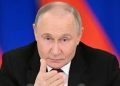
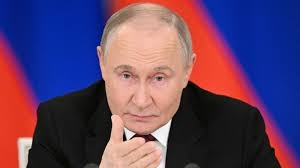
Russian state television showed Sergei Karakayev, commander of Russia’s Strategic Missile Forces, reporting to Putin on what Moscow described as a successful launch. Putin praised the test and called the Sarmat “the most powerful missile system in the world,” claiming its warhead capacity is more than four times greater than any Western equivalent.
The Sarmat, known in the West as “Satan II,” is designed to replace Russia’s ageing Soviet-era Voyevoda missiles. Putin said the missile was capable of suborbital flight, giving it a range of more than 35,000 kilometres, and claimed it could penetrate existing and future missile defence systems. Russian officials have said the system will strengthen the country’s strategic nuclear forces once deployed.
The test follows years of delays and setbacks. Development of the Sarmat began in 2011, but the programme has faced repeated technical problems. Reuters reported that a September 2024 test left a deep crater at the launch silo, according to Western experts, suggesting a major failure.
Putin first unveiled the Sarmat in 2018 alongside other advanced weapons systems, including the Avangard hypersonic glide vehicle, the Poseidon underwater drone and the Burevestnik nuclear-powered cruise missile. He has presented the weapons as Russia’s answer to U.S. missile defence systems, which Moscow argues could undermine strategic balance.
The launch comes at a tense moment for global arms control. New START, the last treaty limiting U.S. and Russian strategic nuclear weapons, expired on February 5, leaving the world’s two largest nuclear powers without legally binding limits on deployed strategic arsenals for the first time in decades.
The treaty had capped each side at 1,550 deployed strategic warheads and 800 deployed and non-deployed delivery systems, including missiles and bombers. Its expiry has raised concerns among arms-control advocates about a renewed nuclear arms race, especially as both Washington and Moscow continue modernising their arsenals.
For Russia, the successful test is being presented as proof that its nuclear modernisation programme remains on track despite past failures. For the West, it is likely to deepen concern over the erosion of arms-control guardrails and the growing role of nuclear signalling in Moscow’s confrontation with Washington and NATO.