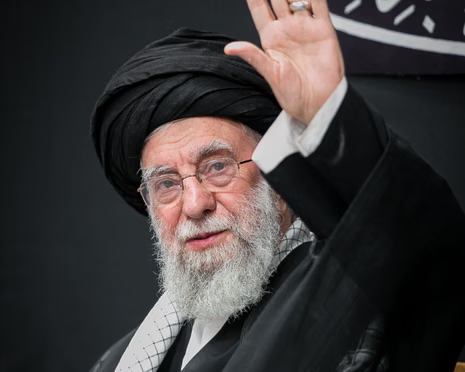
TEHRAN/WASHINGTON — Iran’s Supreme Leader, Ayatollah Ali Khamenei, was killed on Saturday in joint U.S.-Israeli airstrikes, according to Iranian state media and multiple international news outlets, in a dramatic escalation that has pushed the Middle East into one of its most dangerous crises in years. President Donald Trump confirmed the operation in a televised address and later called Khamenei “one of the most evil people in history,” urging Iranians to “take back” their country.
The strikes hit targets in and around Tehran and other Iranian sites early Saturday. Reuters and AP reported that Khamenei was killed along with several senior Iranian officials, while Iranian state media also announced the deaths of IRGC commander Mohammad Pakpour and senior adviser Ali Shamkhani. Israel earlier said it had targeted top members of Iran’s security leadership, but the full death toll among senior officials remains unclear. Some media have cited higher figures, though those numbers have not been independently confirmed by all major outlets.
Iran’s Islamic Revolutionary Guard Corps responded with threats of what it called its most devastating offensive ever against U.S. bases and Israel. Retaliatory missile and drone attacks were reported toward Israel and across parts of the Gulf, including areas linked to U.S. military facilities or American allies. The widening battlefield prompted an emergency meeting of the U.N. Security Council, where the United Nations, China and other governments called for an immediate ceasefire and a return to diplomacy.
Civilian casualties are also mounting. Iranian authorities say more than 200 people have been killed across the country, though some specific claims — including casualty figures tied to a strike on a girls’ school — remain difficult to verify independently. Reuters reported that state media described heavy civilian losses at one school site but said it could not fully confirm the official numbers.
The killing of Khamenei marks a watershed moment. It not only removes the central figure of Iran’s political and military system, but also raises the risk of prolonged regional war, internal instability in Iran, and a deeper confrontation involving the United States, Israel and Tehran’s remaining allies and proxy forces.