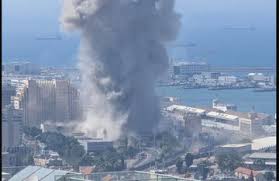
BEIRUT, Lebanon — Israeli attacks killed at least nine people in Lebanon on Wednesday, including two paramedics, as strikes hit several areas in the south and reached close to the outskirts of Beirut, testing a U.S.-mediated effort to reduce fighting between Israel and Hezbollah.
Lebanon’s Health Ministry said an Israeli strike in southern Lebanon targeted an ambulance, killing two paramedics from the Risala Scouts Association. Other attacks hit vehicles and towns across the south, with Lebanese authorities reporting multiple deaths and injuries.
One Israeli raid also struck a vehicle near Beirut, marking one of the closest attacks to the capital since recent understandings aimed at limiting strikes around the city. Reuters reported that Israeli drone strikes hit at least 10 vehicles in Lebanon, including one near Beirut, injuring two people and further straining a fragile de-escalation arrangement.
The violence came as Hezbollah launched rockets toward Israel, prompting Israeli interceptions and raising fresh doubts over a U.S.-mediated framework intended to curb cross-border attacks. Israel’s military said it intercepted a “hostile aircraft” that crossed from Lebanon into northern Israel, though it did not immediately say whether the aircraft was a drone or publicly attribute it to Hezbollah.
Israel says its strikes are aimed at Hezbollah fighters, weapons sites and military infrastructure. Lebanese officials say civilians, rescue workers and residential areas have repeatedly been hit during the campaign.
The latest escalation comes despite renewed diplomatic activity. Israel and Lebanon have agreed to steps toward implementing a ceasefire, including efforts to restore Lebanese Armed Forces control in areas south of the Litani River and exclude non-state armed groups from designated pilot zones.
However, the latest deaths underline how fragile the process remains. Hezbollah has continued attacks from southern Lebanon, while Israel has maintained air and drone operations, saying it will respond to any threat to its northern communities.
The strikes are likely to deepen pressure on Lebanese officials involved in U.S.-facilitated talks in Washington. For civilians in southern Lebanon and communities near Beirut, the renewed attacks have reinforced fears that diplomacy is not yet strong enough to stop the violence.