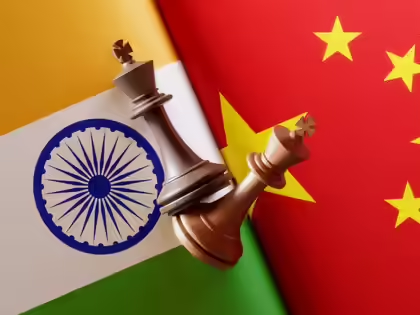
India and China appear to be easing tensions following years of strained relations, especially after the deadly 2020 Galwan Valley clash. A series of high-level visits, including Indian Defence Minister Rajnath Singh and NSA Ajit Doval attending Shanghai Cooperation Organisation (SCO) meetings in China, signal cautious diplomatic efforts. Despite progress—like resuming direct flights, easing visa restrictions, and allowing Indian pilgrims to visit sacred Tibetan sites—deep-rooted challenges remain. Chief among them is the disputed 3,440km Himalayan border, where skirmishes and military stand-offs persist.
China seeks improved economic engagement—more exports, renewed investments, and relaxed visa rules for its workers. But India remains cautious, especially after banning Chinese apps and investments post-2020. Geopolitical factors also play a role. India is reassessing its reliance on the U.S., especially under Trump’s unpredictable second term. The U.S. failed to offer the expected strategic support, embarrassed Delhi by claiming to mediate in India-Pakistan tensions, and hosted Pakistan’s army chief, raising doubts in India’s foreign policy circles.
Simultaneously, Russia’s growing alignment with China amid the Ukraine war has made Delhi wary. With Moscow increasingly dependent on Beijing, India is concerned about Russian neutrality in future conflicts. China’s use of economic leverage, including export restrictions on rare earth materials critical to India’s manufacturing and energy sectors, has further strained ties.
Despite talks, territorial claims remain a flashpoint—particularly China’s continued assertion that Arunachal Pradesh is “Southern Tibet,” a claim India firmly rejects. Experts agree that while a permanent border resolution is unlikely in the near future, both nations are adopting a pragmatic, transactional approach to maintain regional stability and avoid deeper alignment with rival power blocs.