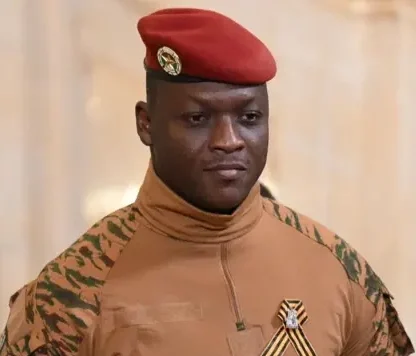
At 37, Capt Ibrahim Traoré has become one of Africa’s most visible and controversial leaders, projecting himself as a revolutionary determined to free Burkina Faso from Western imperialism and neo-colonial influence. Since seizing power in a 2022 coup, he has expelled French troops, aligned closely with Russia, and pursued left-leaning economic reforms — including nationalising foreign-owned gold mines, launching a state mining company, and building the country’s first gold refinery and reserves.
Admired by supporters as a successor to Thomas Sankara, Traoré’s rhetoric has resonated far beyond Burkina Faso, fuelled by slick social media campaigns and pan-Africanist speeches — most notably his 2023 Russia-Africa Summit call for leaders to stop “dancing” to imperialist strings. His image, amplified by Russian media, has attracted global attention, including from African diaspora communities, though critics note it is often propped up by misleading online content.
Despite positive IMF and World Bank reports on economic resilience and poverty reduction, Traoré’s record is blemished by an ongoing Islamist insurgency, crackdowns on dissent, and frosty ties with France and the US. Allegations of Russian exploitation of gold reserves have heightened tensions with Washington.
While his popularity in Africa remains strong, analysts warn that for a lasting legacy, Traoré must prioritise peace, institution-building, and governance over personal power and militarised rule.