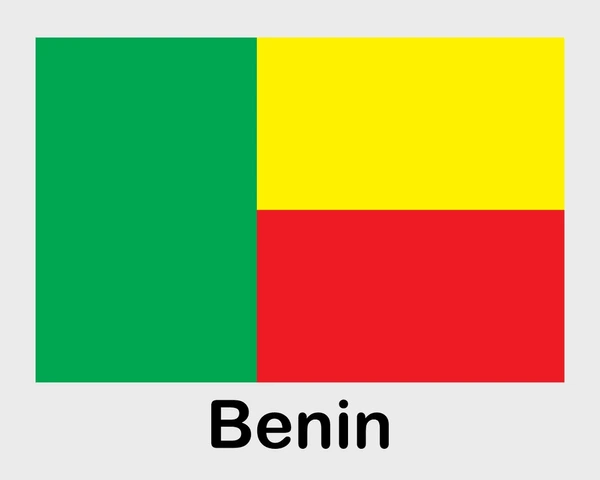
Benin’s presidential race entered its final phase on Friday with opposition candidate Paul Hounkpé insisting the contest was still open, even as Finance Minister Romuald Wadagni remained the clear frontrunner ahead of the April 12 vote. The election will decide a successor to President Patrice Talon, who is constitutionally barred from seeking a third term after serving two five-year mandates.
Speaking to supporters in Cotonou, Hounkpé, candidate of the opposition FCBE party, said the race should not be treated as settled. “It’s a serious match,” he told the gathering, arguing that his camp still believed victory was possible if momentum shifted in the final days of campaigning. His ally Calixte Kounouvo said the party was presenting what it saw as the strongest response to hunger, exclusion and the country’s broader economic challenges. Reuters reported the remarks as part of a last-ditch opposition effort to convince voters that Wadagni’s apparent dominance can still be challenged.
Wadagni, however, remains heavily favored. The ruling coalition chose him as its candidate in September 2025, cementing the backing of Talon’s political machine and positioning him as the continuity candidate for the government’s economic reform agenda. A former Deloitte executive, Wadagni has been one of the most visible faces of Talon’s administration and has campaigned on stability, development and a tougher response to insecurity in the north.
That security message has become central to the campaign. Northern Benin has faced repeated jihadist attacks spilling over from Burkina Faso and Niger, and Reuters reported this week that Wadagni has pledged to create municipal police forces in border towns to strengthen local defenses. The issue has gained added weight since a failed coup attempt on December 7, 2025, when mutinying soldiers briefly claimed power before loyalist forces restored control. Benin said Nigerian fighter jets and troops helped foil the putsch, while France provided intelligence and logistical support.
The election is also notable for the weakness of the broader opposition field. The Democrats, Benin’s other major opposition party, were sidelined after failing to secure enough signatures to get on the ballot, according to Reuters. While the party initially declined to back either candidate, several of its senior figures have since thrown their support behind Wadagni, further reinforcing his position.
If the April 12 vote proceeds as scheduled, it will mark Benin’s fifth democratic transfer of presidential power since the 1990 return to multiparty politics. In a region shaken by coups and constitutional power grabs, that alone gives the election significance well beyond Benin’s borders.