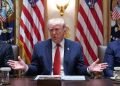
U.S. President Donald Trump has announced a new 10% tariff on countries he deems aligned with the “anti-American policies” of BRICS, further escalating trade tensions with emerging economies. The measure, revealed in a post on his social media platform Truth Social, comes with a stern warning: “There will be no exceptions to this policy.”
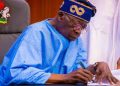
This decision intensifies pressure on countries like Nigeria, which became a BRICS partner in January and has been lobbying for full membership. Nigerian exports are already subject to a 14% U.S. import tariff under earlier Trump policies, and this new duty would bring the effective rate to 24%.
Trump’s move has sparked alarm globally. BRICS foreign ministers meeting in Rio de Janeiro condemned the policy as a threat to multilateralism and a potential catalyst for a fragmented global economy. China labeled the measure “coercive,” warning it could further destabilize global trade.
The implications for Nigeria could be far-reaching. Economists warn of inflation, disruptions to supply chains, and downward pressure on oil prices—one of Nigeria’s major exports. The Trump administration, however, remains unmoved. Officials have begun formally notifying affected nations, insisting they “take it or leave it.”
The BRICS bloc—comprising Brazil, Russia, India, China, South Africa, and now a group of partner nations—is designed to counterbalance Western economic dominance. Trump’s tariff threat appears aimed at containing that influence but risks triggering broader geopolitical and economic backlash.