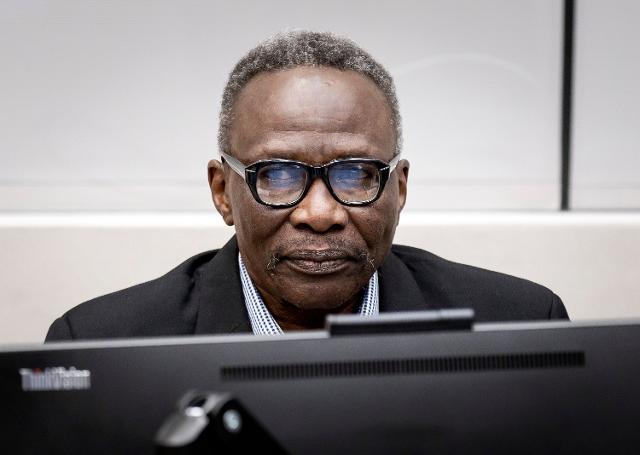
International Criminal Court (ICC) prosecutors are pushing for a life sentence for former Janjaweed commander Ali Muhammad Ali Abd-Al-Rahman, arguing that anything less would fail to reflect the scale and brutality of the crimes committed in Darfur more than two decades ago.
Prosecutors say Abd-Al-Rahman played a central role in a campaign of massacres, rapes and village burnings carried out by Janjaweed militias aligned with the Sudanese government during the height of the Darfur conflict in the early 2000s.
Last month, ICC judges found him guilty on 27 counts, including murder, rape, persecution and other inhumane acts, marking the first-ever ICC conviction directly related to the Darfur conflict. Survivors testified about coordinated attacks in which villages were surrounded, men were executed, women were gang-raped and homes were systematically torched.
Despite extensive witness testimony, documentary evidence and his long-known reputation in the region, Abd-Al-Rahman has maintained his innocence, insisting he was not the notorious Janjaweed leader widely known as “Ali Kushayb.” The judges rejected that claim as “not credible,” ruling that the evidence clearly established his identity and command role.
Following the conviction, his defence team has asked the court for a dramatically reduced sentence of just seven years, arguing his age — 76 — and time already spent in custody should be taken into account. If accepted, that could see Abd-Al-Rahman walk free in as little as 18 months, a prospect that has horrified many victims’ groups and human rights advocates, who say such leniency would amount to a denial of justice.
The sentencing phase comes at a moment of renewed upheaval in Sudan. Since 2023, fighting between the Sudanese army and the Rapid Support Forces (RSF) — an evolution of the old Janjaweed structure — has killed at least 40,000 people and displaced some 12 million, according to humanitarian estimates. Darfur has once again become a killing ground, with reports of ethnically targeted massacres and sexual violence drawing grim parallels to the atrocities of the early 2000s.
Against this backdrop, the ICC’s decision on Abd-Al-Rahman’s punishment carries heightened symbolic and practical weight. For survivors, a life sentence would be a long-delayed acknowledgement of their suffering and a warning to current perpetrators that the world is still watching.
For Sudan’s warring factions and their militias, the outcome may signal whether international justice will remain largely symbolic — or whether it can still reach powerful men who once believed they were untouchable.