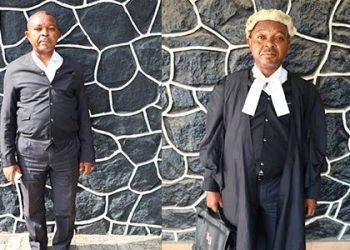
A Federal High Court in Abuja has sentenced an Islamic State West Africa Province (ISWAP) commander, Hussaini Ismaila, to 20 years in prison after he pleaded guilty to multiple terrorism charges linked to a string of deadly attacks in Kano State.
Justice Emeka Nwite delivered the judgment after Ismaila, also known as Mai Tangaran, dramatically changed his plea from not guilty to guilty on all four counts brought against him by the Department of State Services (DSS).
According to the prosecution, Ismaila coordinated a series of armed assaults in 2012 on key security installations in Kano, including:
- The Kano State Police Command Headquarters, Bompai
- The Mobile Police Base along Kabuga Road
- The Pharm Centre Police Station
- The Angwa Uku Police Station
- And several other locations
The attacks left numerous people injured and formed part of a broader terror campaign in the state.
Ismaila was eventually arrested on August 31, 2017, in Tsamiyya Babba Village, Gezewa Local Government Area of Kano State, and charged under the Terrorism Prevention (Amendment) Act, 2013.
The trial was repeatedly delayed due to interlocutory appeals and a trial-within-trial to determine whether his confessional statements were made voluntarily. When proceedings resumed, the prosecution called five witnesses, including two DSS operatives and two eyewitnesses who directly experienced the attacks.
After the fifth witness testified, Ismaila abandoned his initial defence and opted to plead guilty.
His counsel, P. B. Onijah of the Legal Aid Council, pleaded for leniency, arguing that the defendant had shown remorse, accepted responsibility, and “changed his plea to avoid wasting the court’s time.”
Justice Nwite convicted him on all four counts, sentencing him as follows:
- 15 years’ imprisonment on count one
- 20 years each on counts two, three, and four
The judge ordered that all sentences run concurrently, meaning Ismaila will serve a maximum of 20 years, backdated to August 31, 2017, the date of his arrest.
The court further directed the Controller-General of the Nigerian Correctional Service to keep Ismaila in any designated facility to serve his term.
In a notable addition, Justice Nwite ordered that upon completion of his prison sentence, Ismaila must undergo rehabilitation and deradicalisation before being allowed to reintegrate into society.