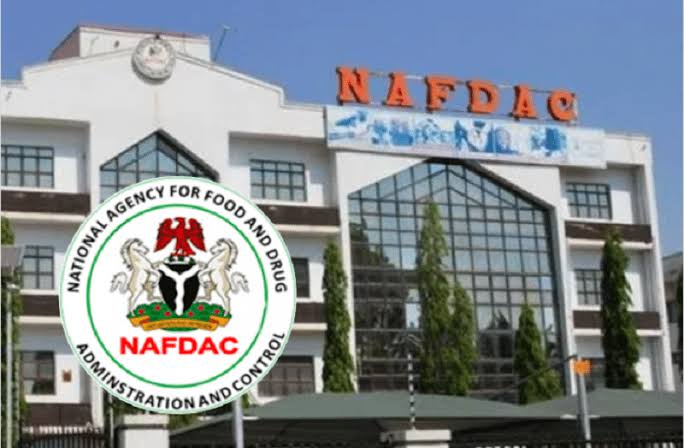
Nigerians face renewed food-safety concerns after tests found pesticide residues above permitted limits in some bean samples, while prohibited agricultural chemicals continue to circulate despite regulatory restrictions. The National Agency for Food and Drug Administration and Control (NAFDAC) says it is strengthening enforcement to curb the trade and misuse of these products.
NAFDAC Director-General, Professor Mojisola Adeyeye, disclosed the findings during a media briefing at the agency’s office in Lagos on Friday, October 9, 2026. She said the agency was targeting illegal imports, unauthorised production and distribution networks supplying banned or unregistered pesticides.
The market study detected excessive residues of pyrethroids and dimethoate in some bean samples. Adeyeye warned against using chemicals intended for field application to preserve harvested beans, particularly where the products are not approved for that purpose.
The agency also cautioned that even registered pesticides can leave dangerous residues when users exceed recommended doses, apply them to unsuitable crops or harvest produce before the required waiting period. Poor handling and unsafe disposal of chemical containers can create additional risks.
Enforcement figures show the scale of the problem. NAFDAC said it seized banned agrochemicals valued at more than ₦800 million in Ogun, Ondo, Osun and Oyo states during 2025.
Operations in the North-West between September 2024 and July 2026 led to the seizure, interception or recovery of 2,974 cartons of paraquat-based pesticides valued at about ₦148.7 million. Another 120 cartons of chlorpyrifos-based products, worth more than ₦17 million, were also recovered.
In Kebbi State, the agency reported intercepting 5,619 cartons containing 67,428 litres of paraquat, alongside 500 cartons of atrazine products. It also sealed four unauthorised pesticide and agrochemical manufacturing facilities in Bichi, Kano State, in July 2026.
NAFDAC said the phase-out periods for paraquat-, chlorpyrifos- and atrazine-containing products ended on January 1, 2026. The agency has also restricted the importation, manufacture and sale of 100-millilitre packs of dichlorvos, commonly called DDVP, in open markets and supermarkets.
Adeyeye said the agency supports responsible pesticide use in agriculture but will not tolerate the circulation of prohibited products. The misuse of chemicals, she warned, can threaten consumers, farmers, animals and the environment.
Farmers and agrochemical dealers have been urged to buy products from authorised suppliers, follow label instructions, use only approved quantities and observe the required interval between spraying and harvesting. They should also avoid reusing empty containers for domestic purposes and dispose of chemical waste safely.
NAFDAC said it was expanding public education and enforcement, including training for more than 2,000 agro-input dealers. The agency called on importers, manufacturers, distributors, farmers and consumers to help identify illegal products and comply with pesticide safety requirements.