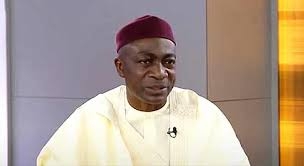
Senate spokesperson Yemi Adaramodu has warned that any attempt to convert Nigeria’s federal lawmakers from full-time to part-time status could severely weaken the country’s democratic system.
Speaking on Politics Today, a programme aired on Channels Television on Friday, Adaramodu rejected suggestions for a structural reduction of legislative duties and pay in the name of fiscal prudence.
“If the parliament is on part-time, then it means democracy is on part-time,” the Ekiti South Senator declared. “There is no democracy that derides its parliament and thrives.”
The All Progressives Congress (APC) lawmaker emphasized that the legislative arm remains the backbone of the democratic process and should not be undermined by budget-cutting efforts. He argued that lawmakers play a vital role not only in making and reviewing laws but also in representing and supporting their communities.
“The Nigerian parliament is not only for lawmaking; we do oversight function. We advocate for our constituents,” he explained. “It will just be bewildering that even out of the three arms of government that we have in Nigeria, it is only the parliament and parliamentarians that our people have access to.”
Adaramodu gave a personal account of the kind of responsibilities lawmakers face, saying they often bear financial and social burdens that go beyond legislation. “We go home almost every time, and we are the ones when they give birth to a new baby, they ask for naming ceremony funds. When they are building a new house, it is from us they ask for assistance.”
He further pushed back against public criticism of lawmakers’ pay, insisting that they do not enjoy as many privileges as assumed. “If we are on part-time, can’t the same amount of money be paid to part-time legislators?” he asked rhetorically.
“We are in Abuja, is it the National Assembly that is giving us housing? Is it the National Assembly that is employing domestic staff for us? We are here on our own,” he said, noting that housing allowances are granted once every four years and are deducted monthly from salaries.
Adaramodu also touched on the controversial issue of official vehicles, clarifying that these cars are not registered in lawmakers’ names and are technically not personal property—though he did not confirm whether members take them home after their terms.
His comments come amid renewed public scrutiny over legislative earnings. In 2024, former Senator Shehu Sani stirred debate by claiming senators were receiving ₦21 million monthly, a claim swiftly denied by the current Senate.
Adaramodu’s firm stance is a clear message to reform advocates: tampering with the structure of the legislature may come at the expense of Nigeria’s democratic integrity.