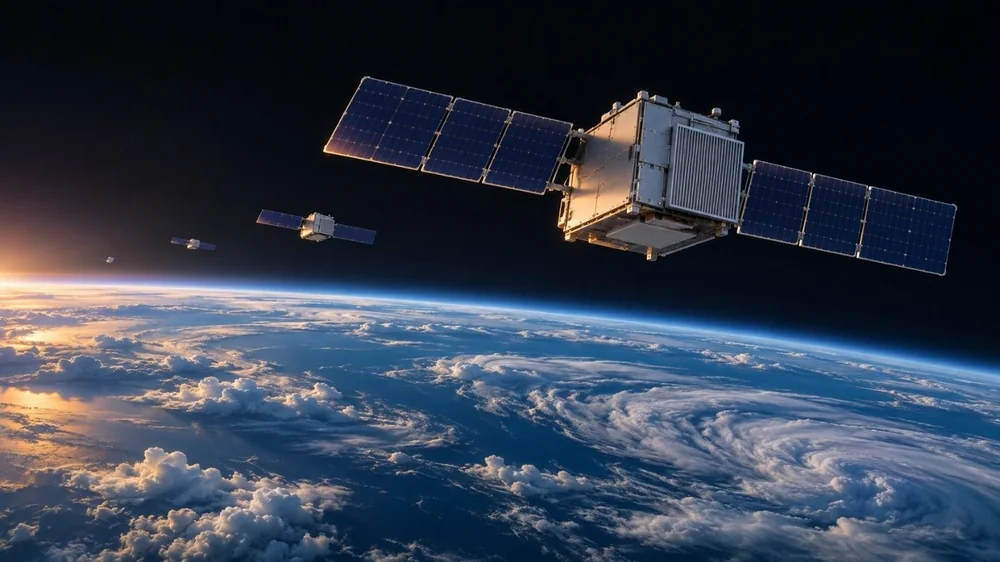
SpaceX has secured regulatory approval for a proposal that could take data processing beyond traditional server facilities and into space, with permission to pursue a satellite network involving up to one million spacecraft.
The US Federal Communications Commission (FCC) granted the approval on November 25, 2026, for a project known as Starmind. Under the plan, satellites would function as orbital data centres, carrying out computing operations in space and making their capacity available to users on Earth.
The proposal reflects Elon Musk’s interest in developing new infrastructure for artificial intelligence. Instead of depending solely on large facilities on the ground, SpaceX wants to explore whether some computing operations can be handled by equipment operating above the planet.
A major part of the company’s argument is the availability of solar energy in orbit. SpaceX believes satellites fitted with solar panels could generate the electricity needed to run computing equipment, potentially reducing reliance on the power and cooling systems required by conventional data centres.
The proposed network would use optical links to connect satellites, while radio communication would provide backup and support emergency control. The spacecraft are expected to operate at altitudes ranging from about 500 to 1,002 kilometres.
However, the approval does not mean the entire network will be deployed immediately. SpaceX faces a series of deadlines and regulatory conditions stretching over more than a decade.
The company is required to place its first operational satellite in orbit by November 25, 2033. It must then deploy at least 10 per cent of the authorised constellation by November 2035 and reach the halfway mark by November 2038.
Full deployment is expected by November 25, 2040. Failure to meet the required milestones could put the authorisation in jeopardy.
The proposal has also attracted objections from other organisations in the space sector. Amazon’s Kuiper Systems, satellite operator Viasat and the American Astronomical Society have raised concerns involving orbital congestion, possible interference and the consequences of adding such a large number of spacecraft to an already busy space environment.
Beyond those concerns, the project would demand considerable engineering and financial resources. Its proposed scale is also tied to SpaceX’s ability to develop and use its Starship launch system to transport large numbers of satellites into orbit.
Some regulatory questions remain unresolved. The FCC has deferred a decision on SpaceX’s request for alternative disposal arrangements for certain satellites operating above 600 kilometres, pending further information.
The decision gives SpaceX a route to pursue Starmind, but the company’s ambition remains dependent on technology, funding, launch capacity and compliance with regulatory requirements.
Whether orbital data centres can become a practical alternative to facilities on Earth will only become clearer as the project develops.