

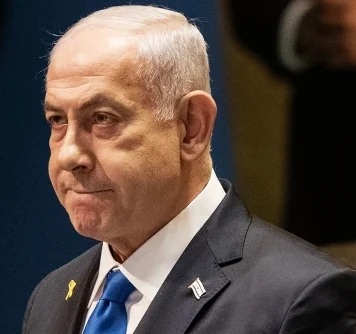
JERUSALEM, Israel
Israeli caretaker Prime Minister Benjamin Netanyahu has renewed his call for a national unity government, insisting that only a broad political coalition can guarantee Israel’s long-term security amid growing tensions with Iran and deepening divisions following last month’s inconclusive parliamentary elections. Netanyahu made the appeal in a video statement on Saturday, urging his main political rival, former military chief Gadi Eisenkot, to put aside their differences and begin negotiations without preconditions.
The prime minister said a security briefing he held with Eisenkot on Thursday reinforced his belief that Israel urgently needed a government capable of addressing its most serious national security challenges. He argued that a coalition bringing together major Jewish political parties from the centre and right could strengthen national stability and confront what he described as an existential threat from Iran. Netanyahu accused Tehran of attempting to rebuild its nuclear programme and warned that Israel must prevent Iran from acquiring nuclear weapons. He maintained that a unity government could help eliminate the Iranian threat while promoting national reconciliation.
However, Eisenkot swiftly rejected the appeal, accusing Netanyahu of political manoeuvring aimed at preserving his influence after losing his parliamentary majority. The former army chief said negotiations between their political parties were already being arranged and dismissed Netanyahu’s public intervention as political theatre. The disagreement follows Israel’s October 27 parliamentary election, which produced no outright majority in the 120-seat Knesset. Netanyahu’s right-wing and religious alliance secured 53 seats, while Eisenkot’s four-party bloc won 48. Arab-led parties secured a record 19 seats.
President Isaac Herzog subsequently tasked Eisenkot with forming a government after 67 lawmakers recommended him for the position, compared with 46 who endorsed Netanyahu. Eisenkot has 28 days to assemble a governing coalition, with a possible 14-day extension. A major obstacle remains the participation of Arab political parties, which Netanyahu has strongly opposed. He has repeatedly suggested that any government dependent on their parliamentary support would undermine Israel’s security, a position rejected by his political opponents. Eisenkot has indicated a willingness to work with some members of Netanyahu’s Likud party and other right-wing groups, provided they demonstrate a genuine commitment to political cooperation.
However, he has resisted proposals that would allow Netanyahu to continue leading the government. The political confrontation comes as Israel faces continuing regional security challenges and disagreements over military conscription, governance and the country’s future direction. With coalition negotiations continuing, attention is turning to whether the rival political blocs can reach a compromise or whether another period of political uncertainty awaits Israel.



















